Skip to content
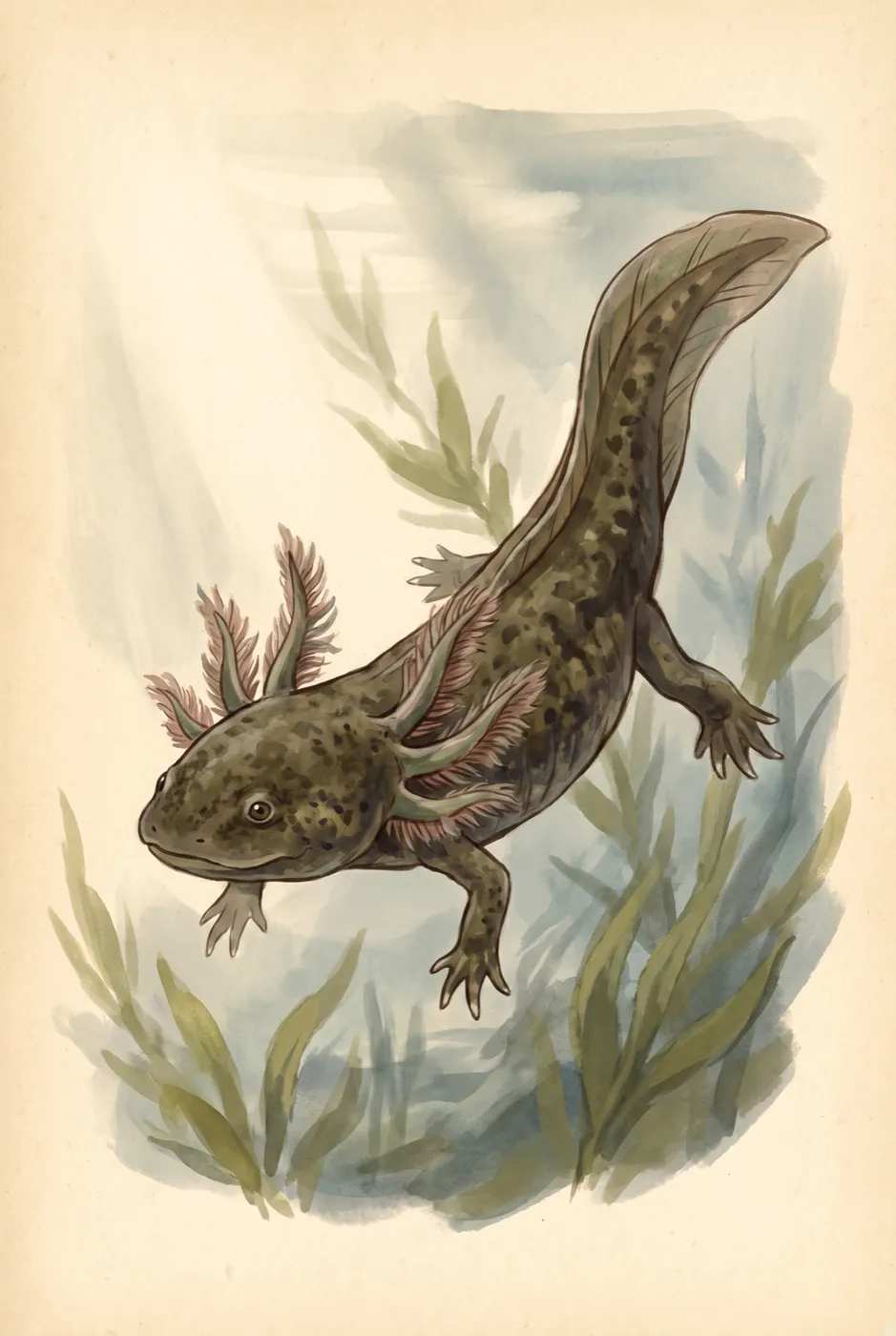
Original illustration of the Axolotl

Card 04 of 30

Axolotl

Ambystoma mexicanum

Critically Endangered

The salamander that never grows up lives in one city’s canals.

Size
8–12 in · 56–226 g
Lifespan
10–15 years
Diet
Worms, mollusks, crustaceans, insect larvae & small fish
Remaining↓
Not yet verified
The Axolotl in its habitat, an original illustration
Canals of Xochimilco, southern Mexico City, Mexico

Where it lives

Canals of Xochimilco, southern Mexico City, Mexico

Ranges stay general on purpose. Witness never publishes a location that could help someone find an animal already under pressure.

See it on the map

What threatens it

  • Habitat drained & degraded
  • Water pollution
  • Invasive species
  • Urban growth

Life cycle

A female lays 300 to 1,000 eggs, placed one by one on plants and rocks to keep them from predators. The eggs hatch about two weeks later, and the young mature at six to eight months.

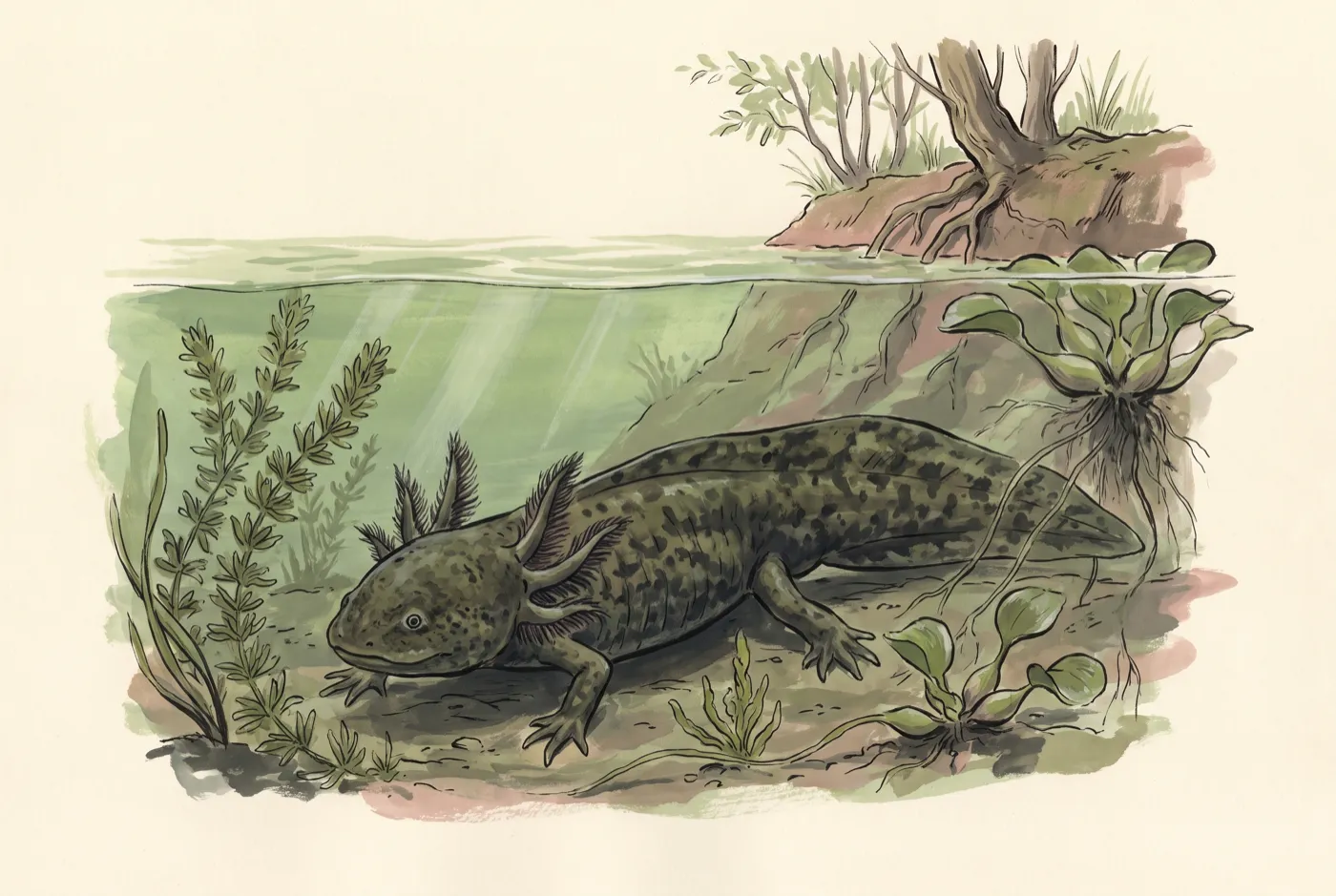
Field study of the Axolotl, an original illustration
Field study · Axolotl
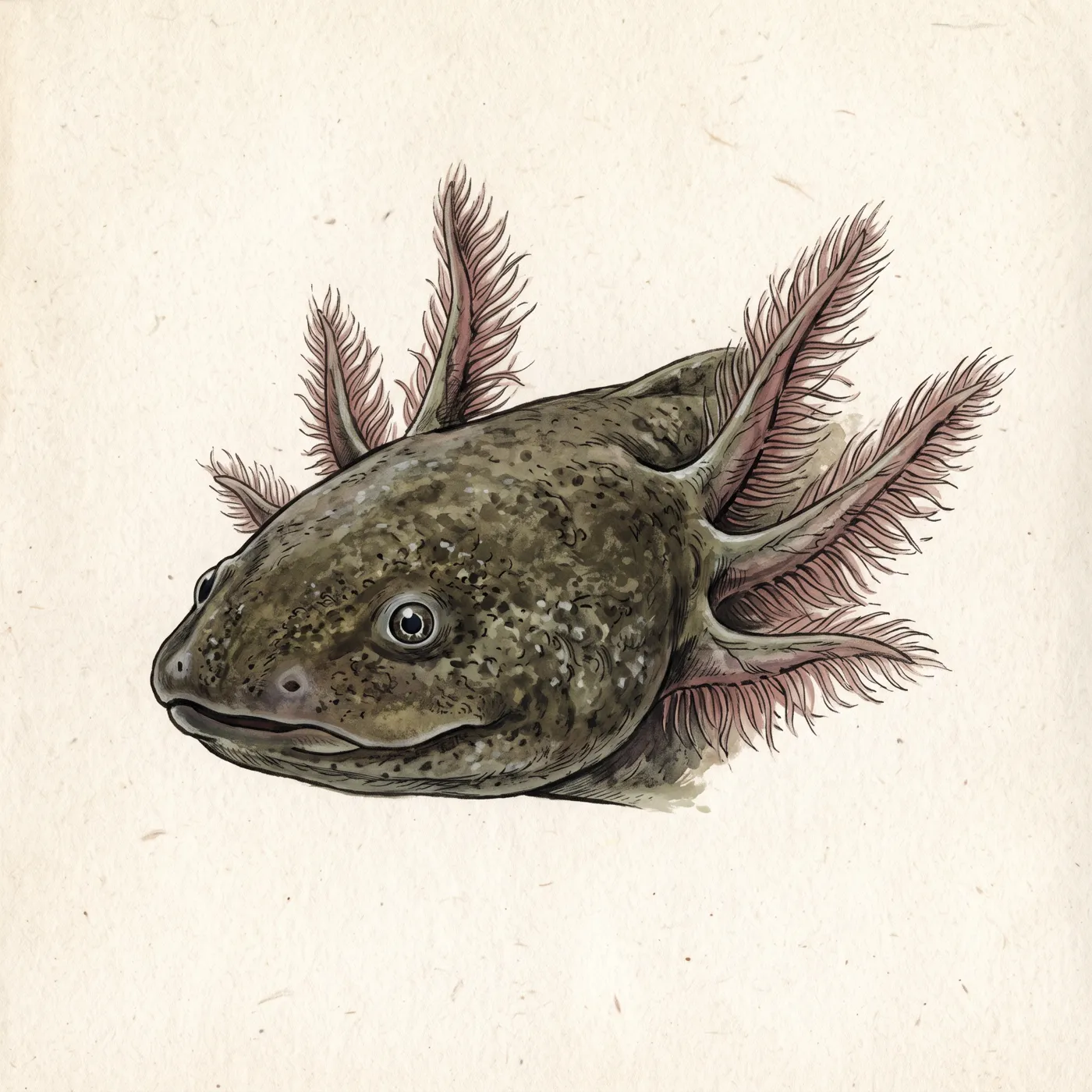
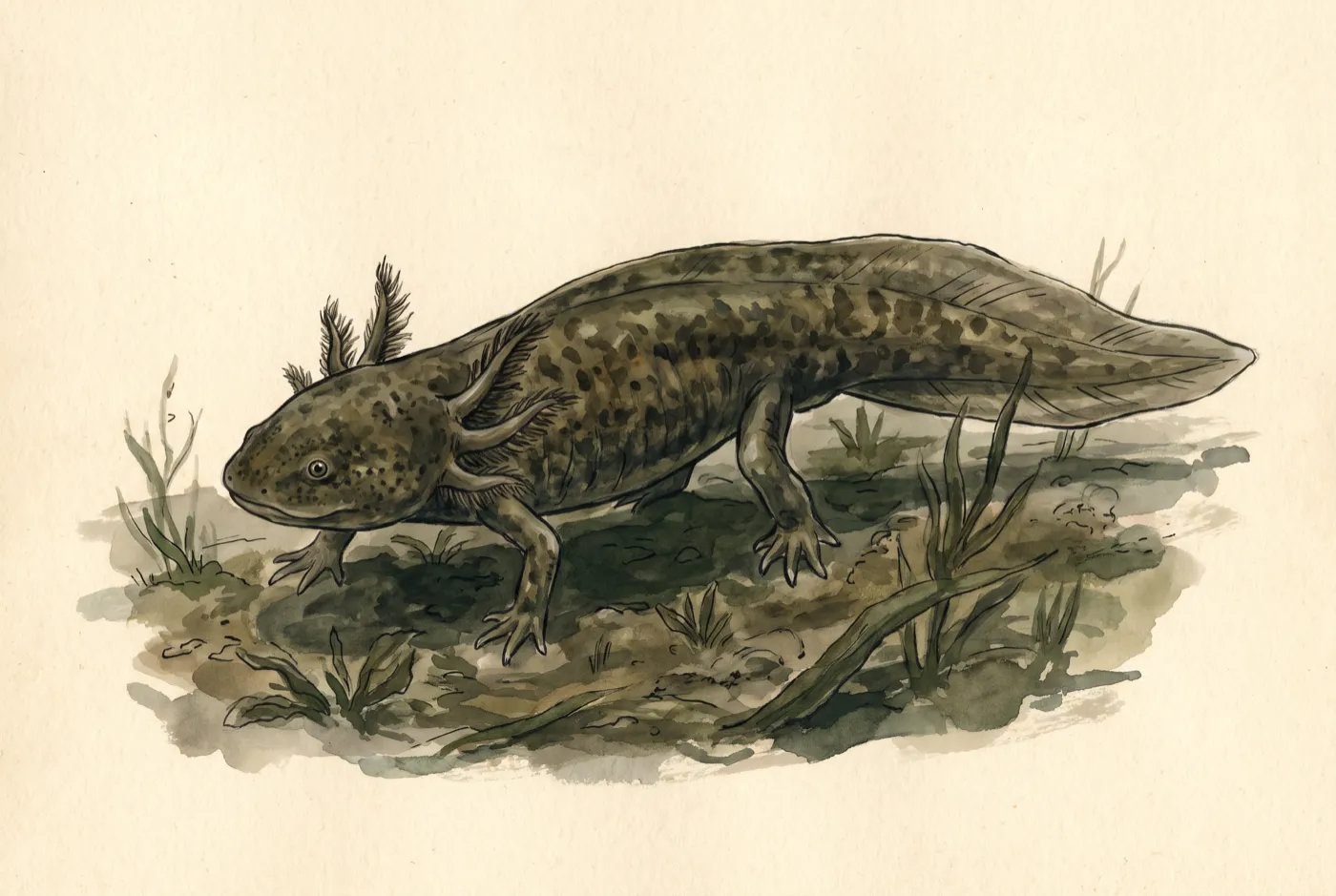
The Axolotl observed in the field, an original illustration
Field observation

Field notes

Every passage carries the number of the source it came from. Nothing here is written from memory.

The axolotl is a salamander that refused to grow up, and made a life of it.Source 1

Unlike other salamanders, it is neotenic: it keeps its larval body—feathery external gills, a swimming tail, a fin along the body—for its entire life, and never leaves the water.Source 1

It descends from tiger salamanders and has lived in central Mexico for perhaps ten thousand years.Source 1

Its world was once a great basin of lakes and wetlands—Xochimilco and Chalco—along the southern edge of the Valley of Mexico.Source 1

Most of that water was drained as Mexico City grew, and wild axolotls now survive in a few isolated sites in the city’s south.Source 1

The axolotl is woven deep into Mexican history, culture, and identity, and it is famous in science for regrowing what it loses.Source 1

Yet fame has not protected the water it needs. Its remaining habitat is small, isolated, and hemmed in by one of the world’s largest cities.Source 1

To witness the axolotl is to see that a species can be everywhere in culture and almost nowhere in the wild.Source 1
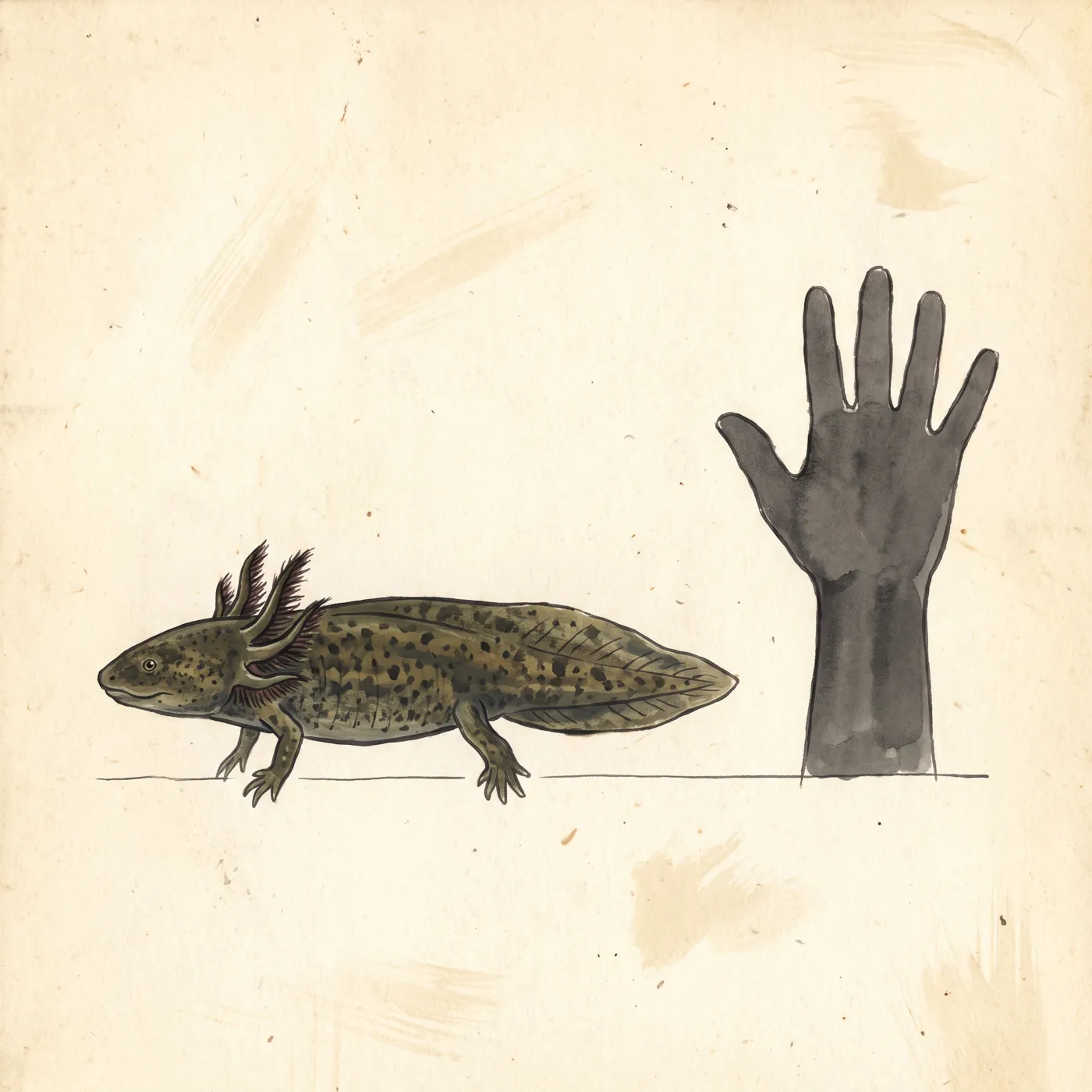

The Axolotl drawn to scale beside a human figure
Scale study · beside a human figure

Did you know

Axolotls are over a thousand times more resistant to cancer than mammals — one more reason science watches them closely.

This week’s act · for the Axolotl

Understand the water it needs

Read San Diego Zoo Wildlife Alliance’s axolotl profile—neoteny, the drained lakes, and the canals where the wild ones remain.

with San Diego Zoo Wildlife Alliance

4 minutes · Worldwide · verified 22 August 2026

Witness records that this door was opened. It never claims the outcome.

Sources & verification

Status
Critically Endangered
Range (generalized)
Canals of Xochimilco, southern Mexico City, Mexico
Fact-checked
25 August 2026
Location review
generalized
Artwork
AI-assisted stylized illustration
  1. San Diego Zoo Wildlife Alliance

    Axolotl

    Open source ↗Last accessed 22 August 2026

Record last fact-checked 25 August 2026. The illustrations are original, drawn for Witness; they are not photographs.

In the app, this card arrives on a Monday.

Meet the species, bear witness once, take up its act. The weekly card is free and stays free.