Skip to content
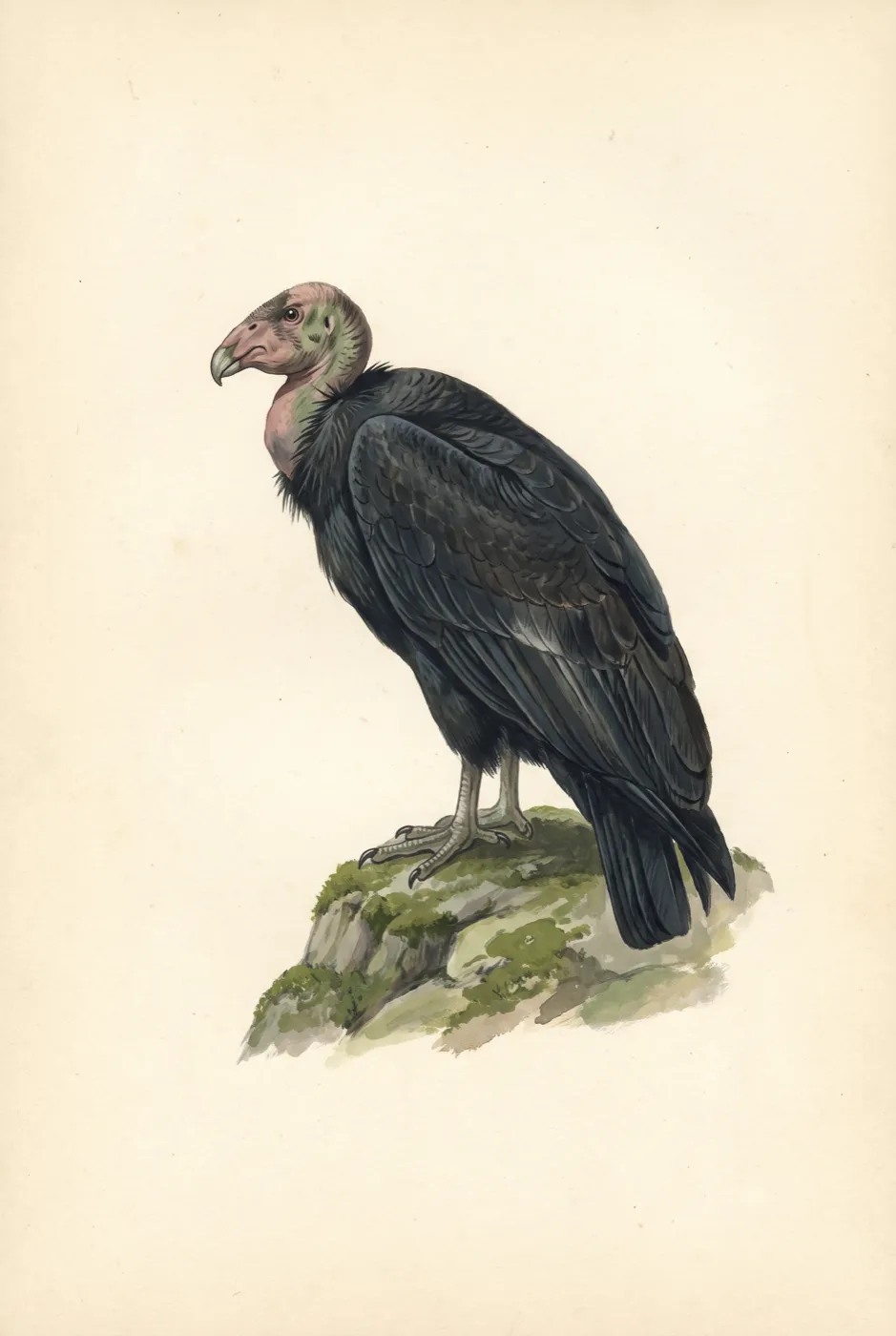
Original illustration of the California Condor

Card 10 of 30

California Condor

Gymnogyps californianus

Endangered

Down to 22 birds, biologists captured every last one. It worked.

Size
9½-ft wingspan · up to 23 lbs
Lifespan
Up to 60 years
Diet
Carrion only — mice to beached whales
Remaining↑
596 Dec 2025 · per Ventana Wildlife Society
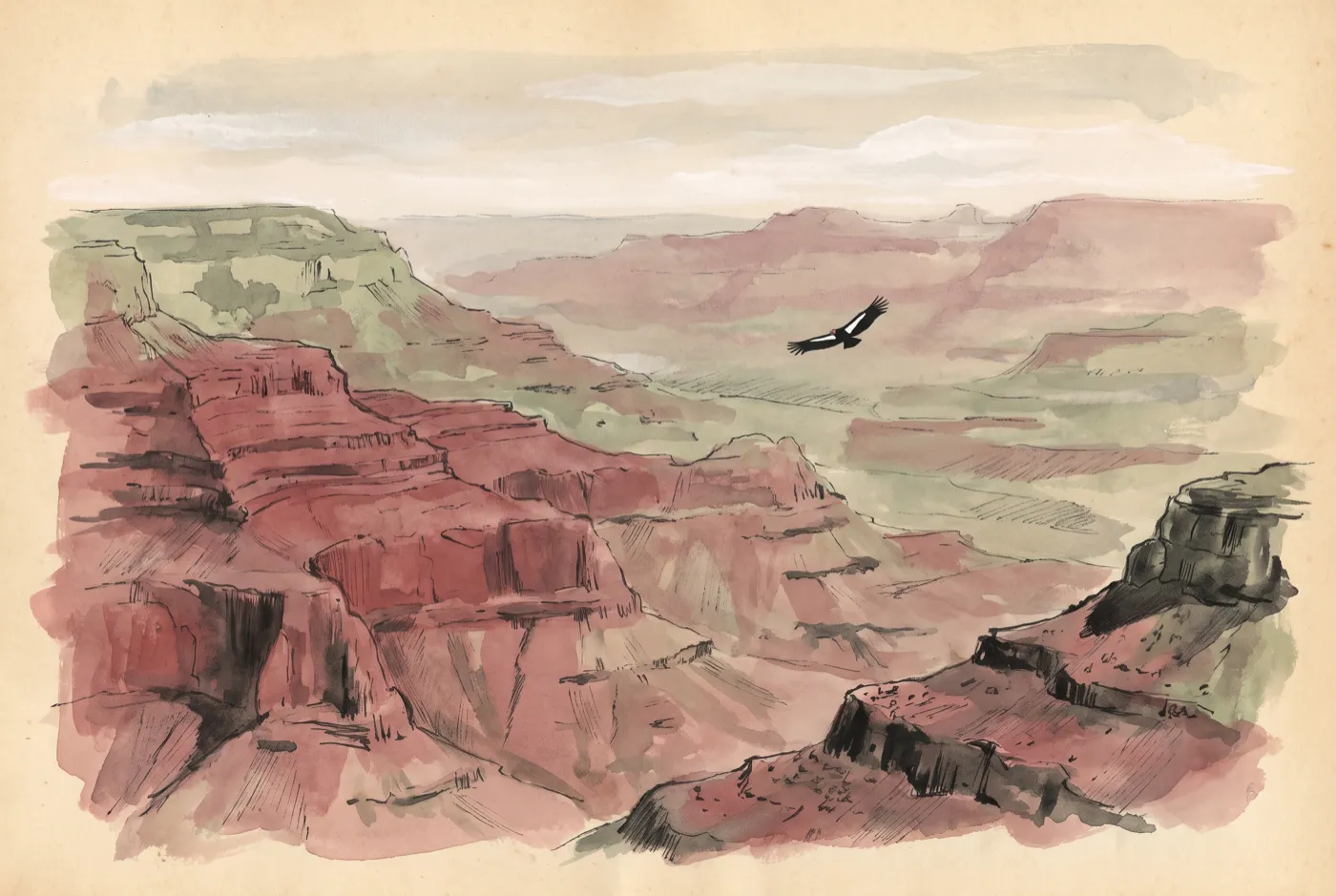
The California Condor in its habitat, an original illustration
California, Arizona–Utah, and Baja California

Where it lives

California, Arizona–Utah, and Baja California

Ranges stay general on purpose. Witness never publishes a location that could help someone find an animal already under pressure.

See it on the map

What threatens it

  • Lead ammunition poisoning
  • Microtrash fed to chicks
  • Power-line collisions
  • Avian influenza

Life cycle

A single egg every other year, incubated by both parents for eight weeks. The chick fledges at five to six months, matures around six years, and most condors mate for life — one of the slowest rhythms of any bird.

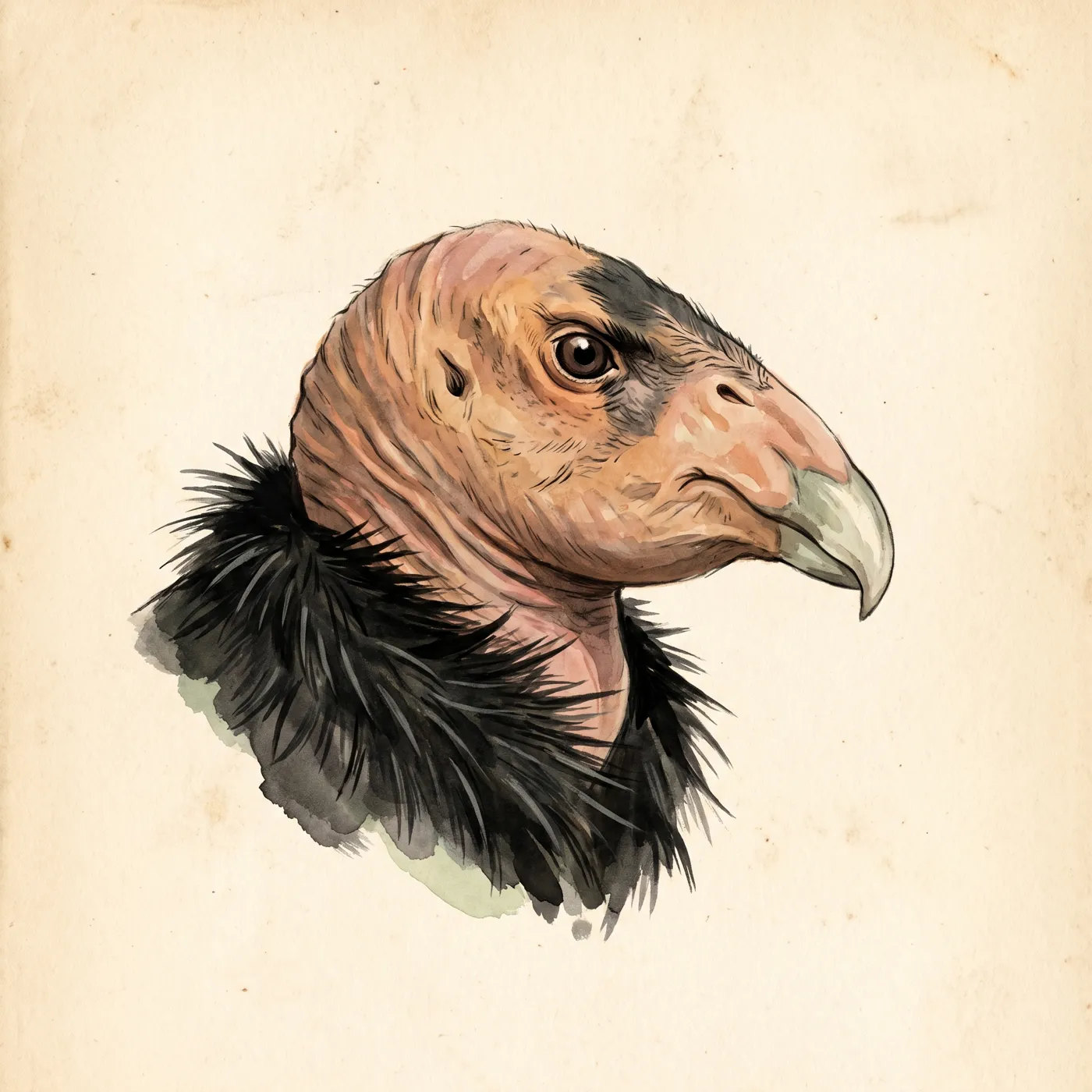
Field study of the California Condor, an original illustration
Field study · California Condor
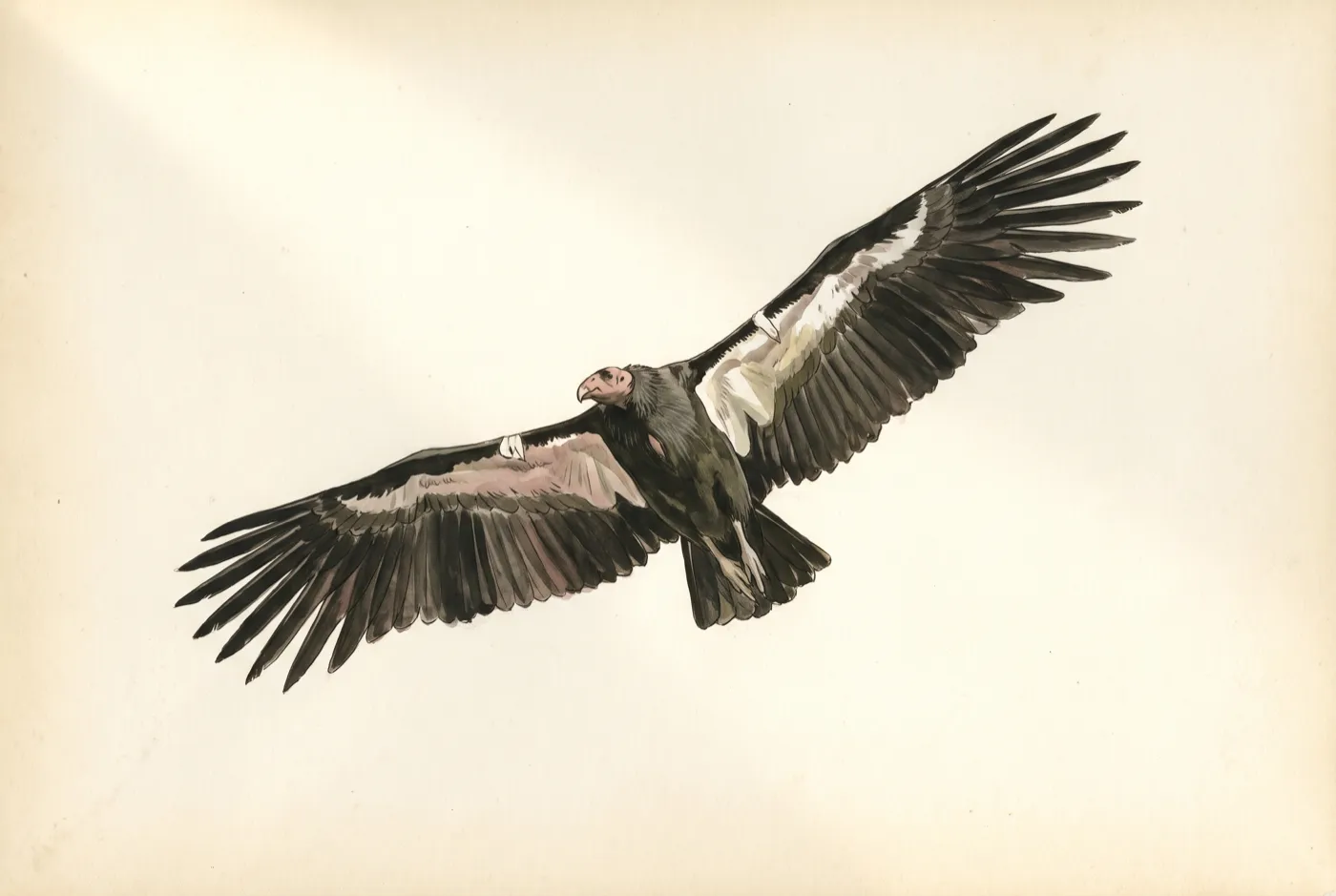
The California Condor observed in the field, an original illustration
Field observation

Field notes

Every passage carries the number of the source it came from. Nothing here is written from memory.

A condor crosses the canyon without a single wingbeat: nine and a half feet of black wing, white triangles beneath, a bare head the color of sunrise.Source 1Source 2

It rides thermals to fifteen thousand feet and covers a hundred miles or more in a day, searching for the dead.Source 2Source 1

Carrion is its entire livelihood — anything already dead, from mice to beached whales.Source 2Source 1

By 1982, twenty-two California condors existed on Earth.Source 3

So biologists made a desperate gamble: on April 19, 1987, the last wild bird was caught, and the entire species went into captive breeding.Source 3

Five years later, condors returned to the California sky; Arizona followed in 1996.Source 3

The threat that remains is invisible: a lead bullet shatters into fragments inside a carcass, and the scavenger swallows the poison with the meal.Source 4

Every wild condor wears a numbered tag, and biologists trap each one yearly to test its blood for lead.Source 5

To witness the condor is to see extinction refused: 596 birds now, more than half of them flying free.Source 6

The recovery holds through choices — copper bullets instead of lead, trash packed out of condor country, and cliffs kept wild.Source 7Source 4
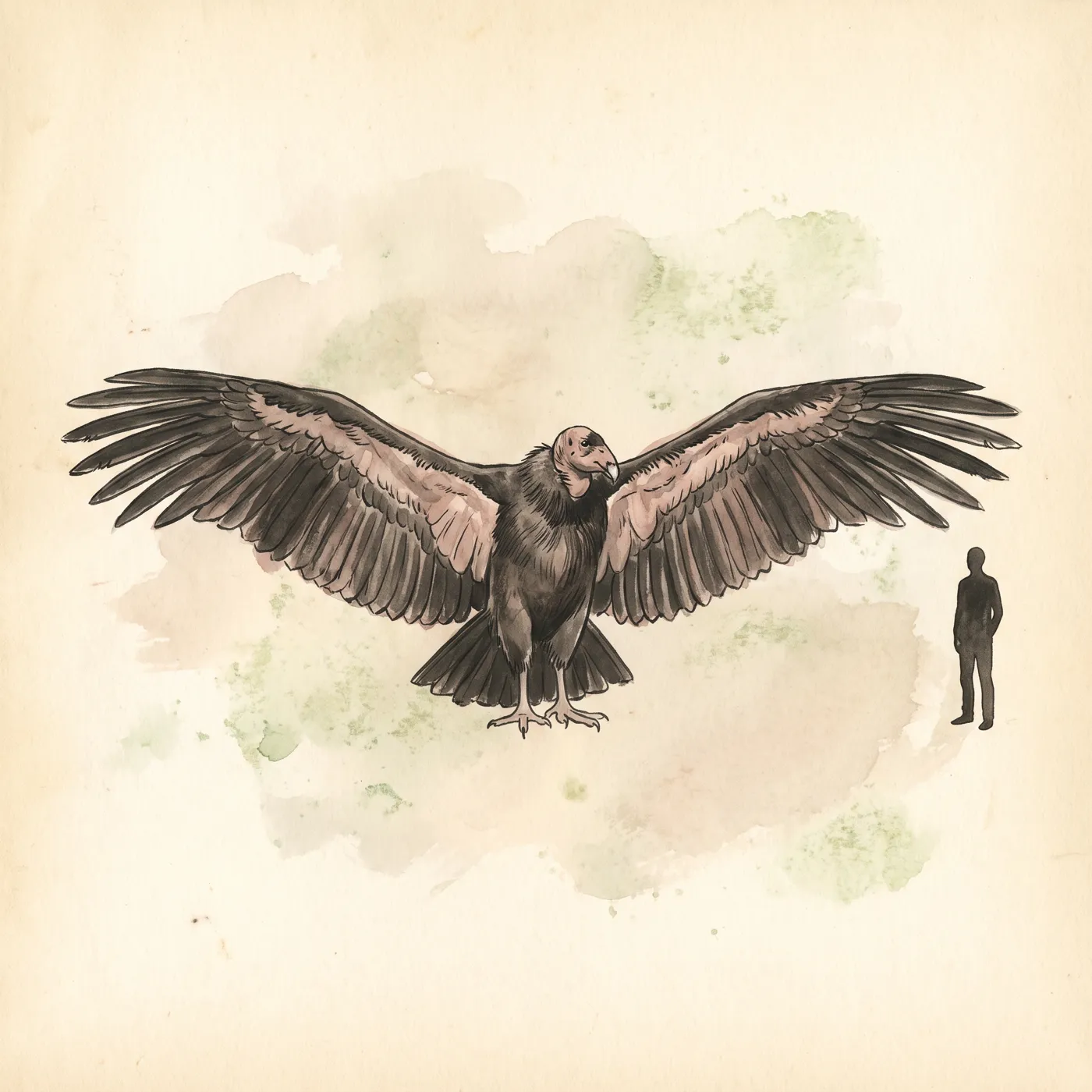

The California Condor drawn to scale beside a human figure
Scale study · beside a human figure

Did you know

A condor can climb to fifteen thousand feet almost without flapping, riding columns of sun-warmed air at up to 55 miles per hour.

This week’s act · for the California Condor

Read the rescue story

Read the National Park Service's account of the condor recovery: the 1987 capture of the last wild bird, the releases, and the lead problem that remains.

with National Park Service

5 minutes · Worldwide · verified 24 August 2026

Witness records that this door was opened. It never claims the outcome.

Help & protection

  • Ventana Wildlife Society

    Free non-lead ammunition

    Has given central-California hunters and ranchers over 19,000 free boxes of non-lead ammunition since 2012, removing lead from the condor's food supply at its source.

    View initiative ↗Verified 24 August 2026
  • The Peregrine Fund

    Condor restoration

    Breeds condors and has released them at Vermilion Cliffs since 1996 — more than a hundred now fly free over the Grand Canyon region.

    View initiative ↗Verified 24 August 2026

Sources & verification

Status
Endangered
Range (generalized)
California, Arizona–Utah, and Baja California
Fact-checked
25 August 2026
Location review
generalized
Artwork
AI-assisted stylized illustration
  1. National Park Service, Grand Canyon

    California Condors

    Open source ↗Last accessed 24 August 2026
  2. San Diego Zoo Wildlife Alliance

    California Condor

    Open source ↗Last accessed 24 August 2026
  3. National Park Service

    California Condor Reintroduction & Recovery

    Open source ↗Last accessed 24 August 2026
  4. National Park Service

    Threats — California Condors

    Open source ↗Last accessed 24 August 2026
  5. National Park Service

    Understanding and Managing Condors

    Open source ↗Last accessed 24 August 2026
  6. Ventana Wildlife Society

    Condor Overview

    Open source ↗Last accessed 24 August 2026
  7. Ventana Wildlife Society

    Free Non-Lead Ammunition Program

    Open source ↗Last accessed 24 August 2026
  8. Ventana Wildlife Society

    Condor Threats

    Open source ↗Last accessed 24 August 2026
  9. The Peregrine Fund

    California Condor Restoration

    Open source ↗Last accessed 24 August 2026

Record last fact-checked 25 August 2026. The illustrations are original, drawn for Witness; they are not photographs.

In the app, this card arrives on a Monday.

Meet the species, bear witness once, take up its act. The weekly card is free and stays free.