Skip to content
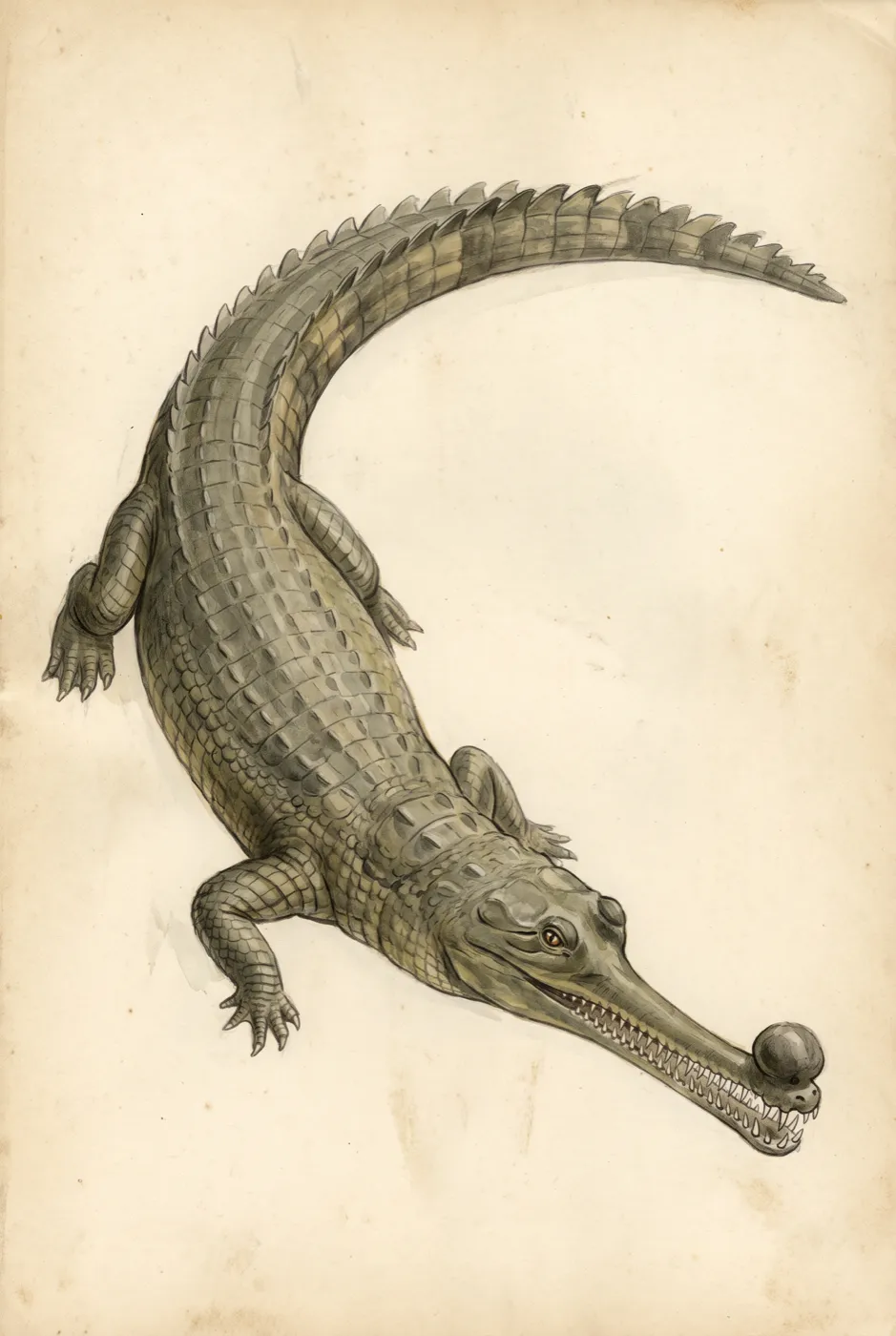
Original illustration of the Gharial

Card 15 of 30

Gharial

Gavialis gangeticus

Critically Endangered

A crocodile with a hundred teeth — and no taste for anything but fish.

Size
Males 16–20 ft · up to 1,500 lbs
Lifespan
Not reliably known
Diet
Fish, almost exclusively
Remaining↑
About 650 wild adults 2019 · per WWF-India
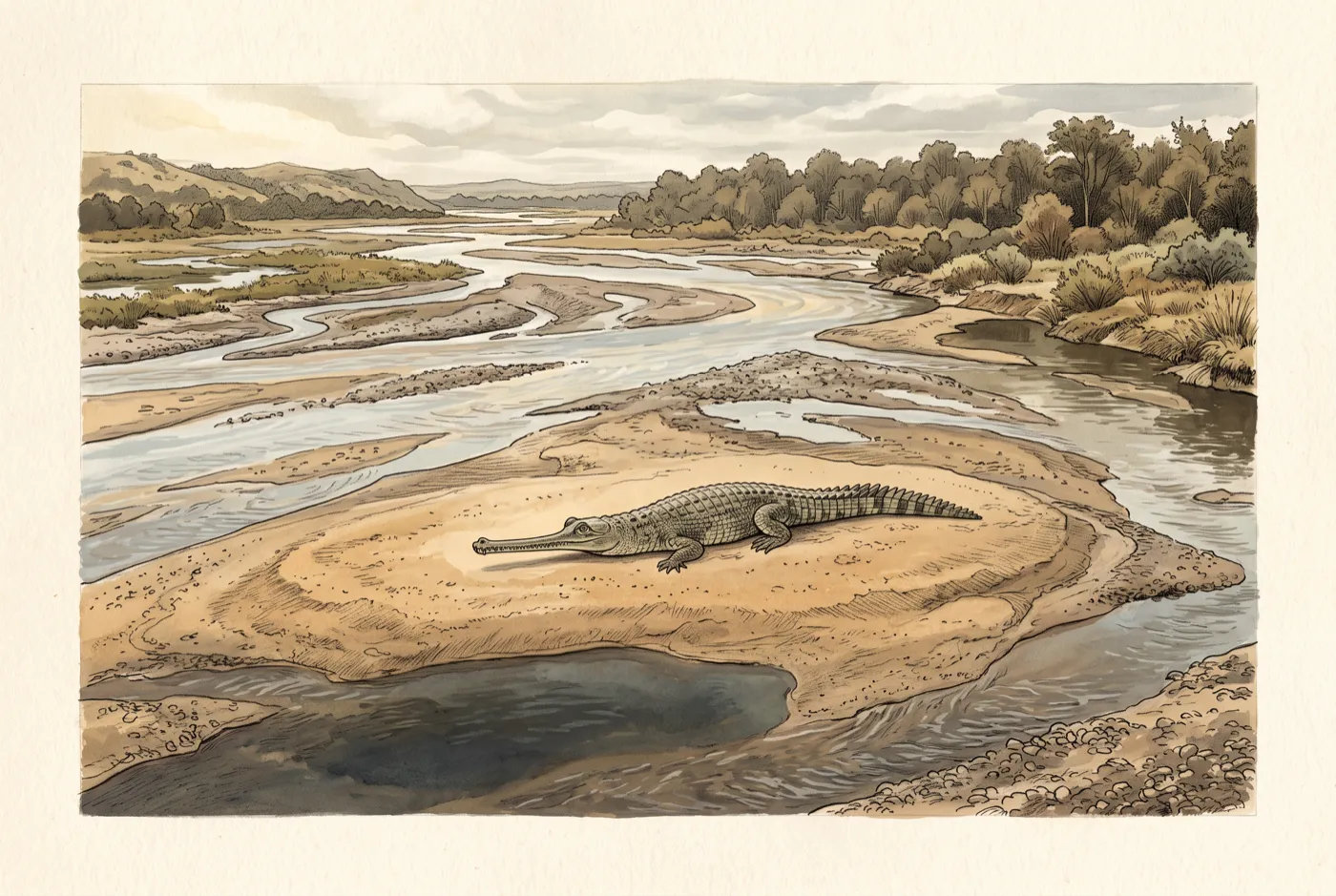
The Gharial in its habitat, an original illustration
Rivers of northern India and Nepal

Where it lives

Rivers of northern India and Nepal

Ranges stay general on purpose. Witness never publishes a location that could help someone find an animal already under pressure.

See it on the map

What threatens it

  • River sand mining
  • Dams & diversion
  • Fishing-net drowning
  • Fragmented rivers

Life cycle

About forty eggs in a sandbank nest, hatching after roughly seventy days. The mother guards nest and hatchlings alone — her jaws, unlike other crocodilians', are too narrow to carry her young.

Field study of the Gharial, an original illustration
Field study · Gharial
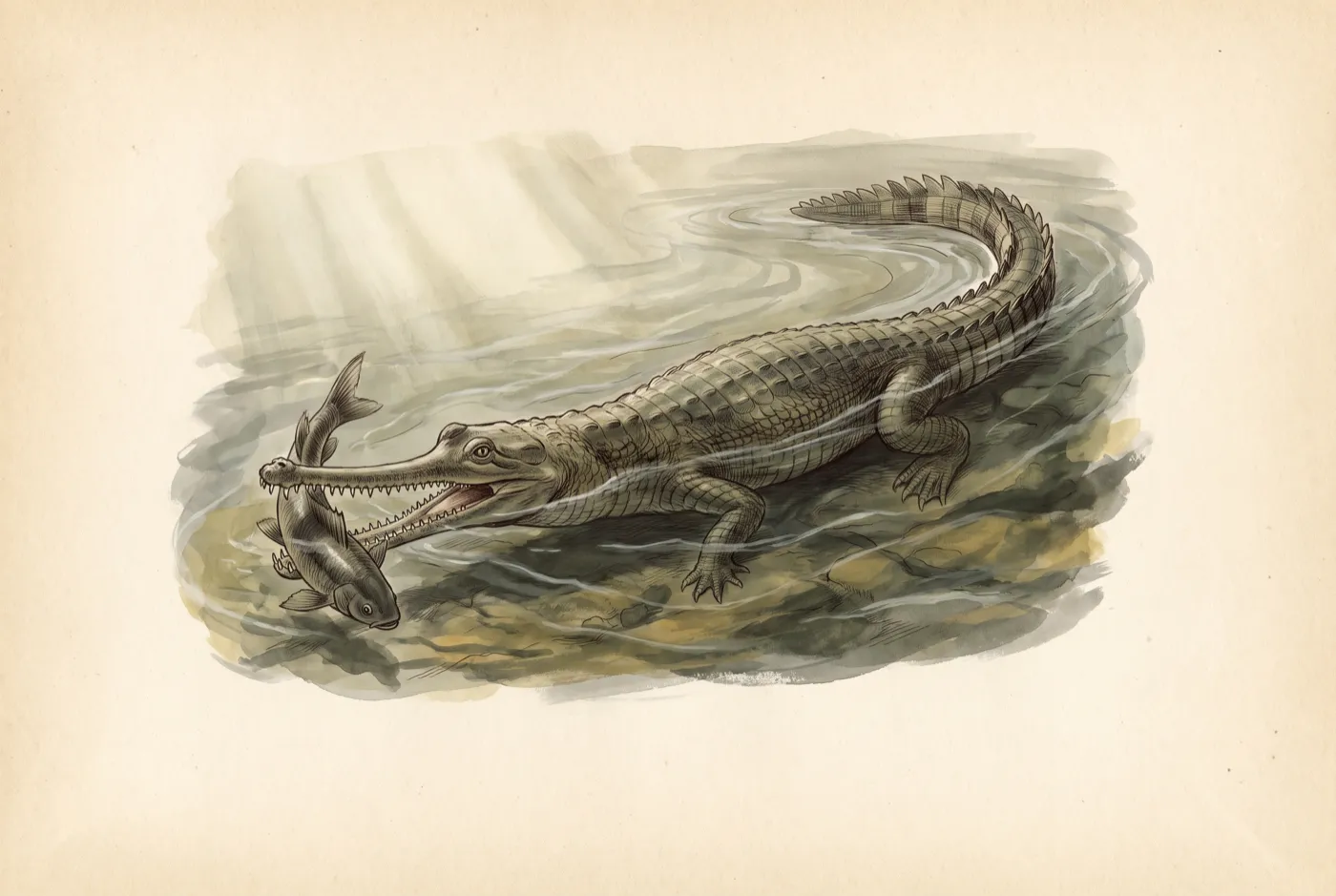
The Gharial observed in the field, an original illustration
Field observation

Field notes

Every passage carries the number of the source it came from. Nothing here is written from memory.

The gharial's snout seems impossible: a yard of slender jaw set with about a hundred needle teeth, too thin to threaten anything but fish.Source 1Source 2

It hunts near the river bottom with swift sideways snaps, and on land it can only slide on its belly between water and warm sand.Source 1Source 3

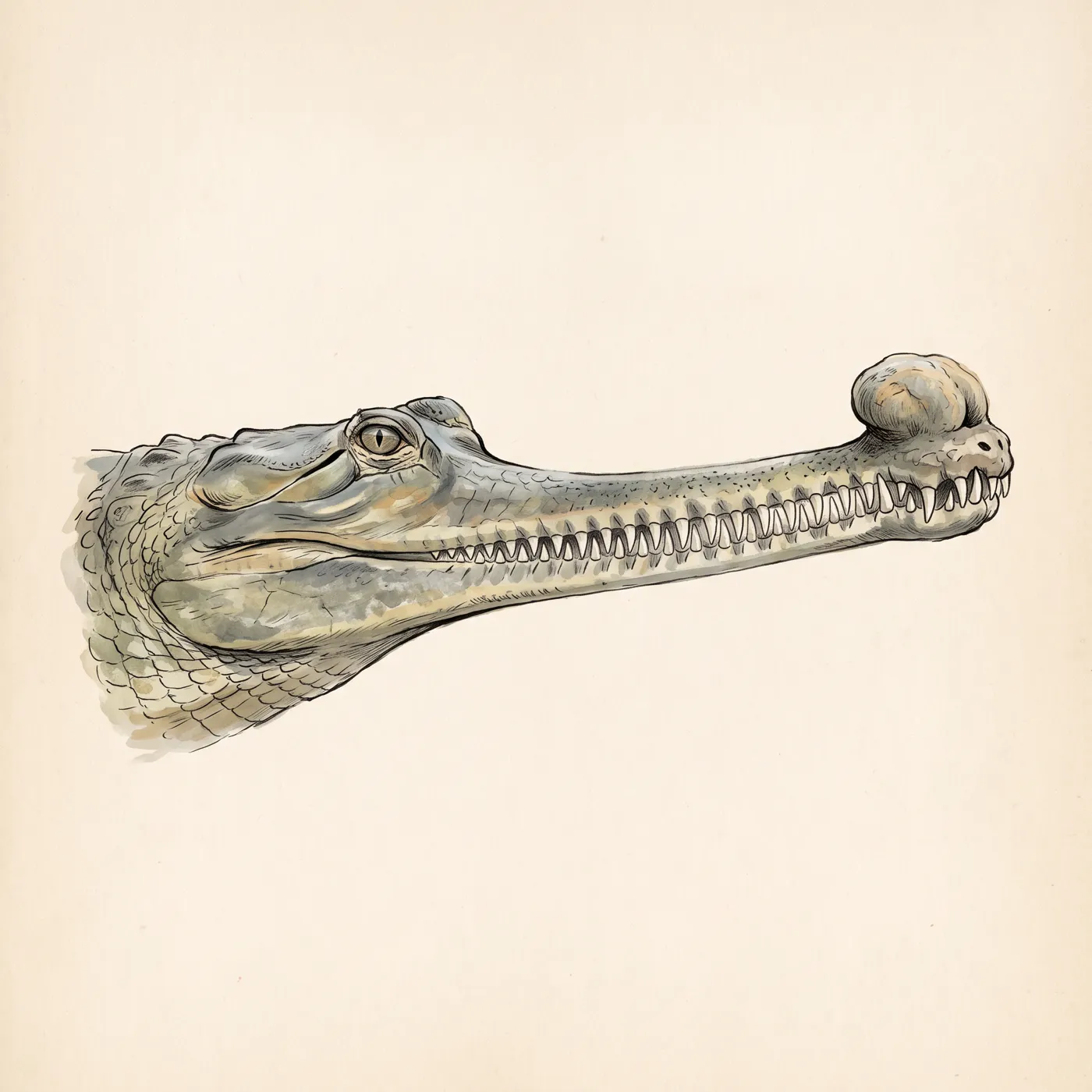
Mature males grow a hollow knob at the snout's tip — the ghara, named for an Indian clay pot — that turns their calls into buzzing whistles.Source 4Source 2

Since the 1940s the species declined by about 98 percent; by the mid-1970s, fifty or sixty survived in India.Source 4Source 5

The rivers themselves are being unmade: sand mining strips the nesting banks, dams starve the deep pools, and fishing nets drown the long-jawed swimmers.Source 6Source 4

A female lays about forty eggs in a sandbank and guards the nest alone.Source 2

Recovery is under way one release at a time: nearly a thousand captive-reared young gharials have entered the Ganga's rivers since 2009.Source 6

Wild adults have climbed from about two hundred to about six hundred and fifty in little more than a decade.Source 6

In Nepal, community Gharial Guard Groups patrol the rivers of Chitwan, keeping watch over the nests.Source 4

To witness the gharial is to take the side of wild rivers — deep pools, clean sandbanks, room to bask.Source 6
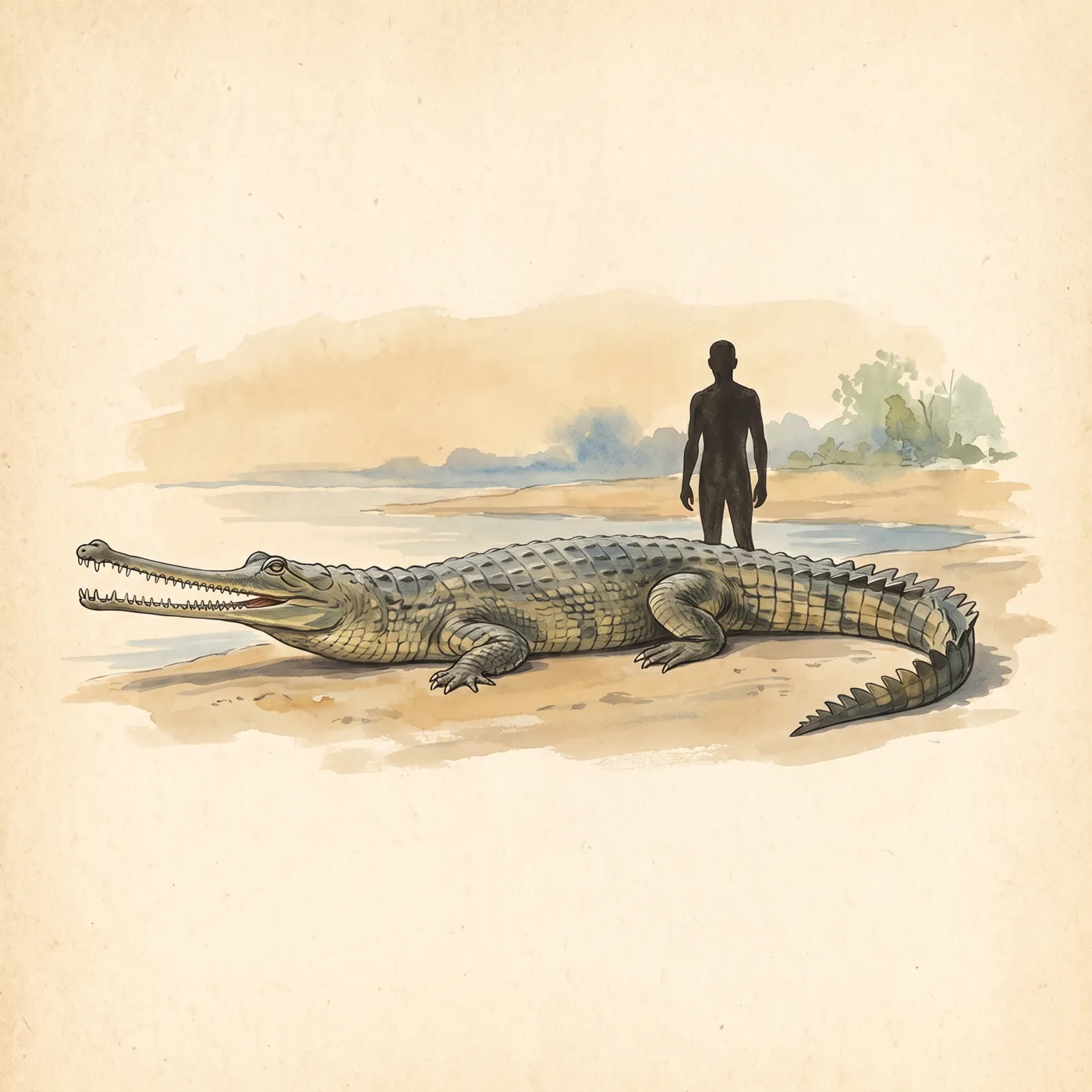

The Gharial drawn to scale beside a human figure
Scale study · beside a human figure

Did you know

The male's ghara covers his nostrils and works as a resonator: gharials buzz and whistle where other crocodiles hiss.

This week’s act · for the Gharial

Meet the gharial

Read the Smithsonian National Zoo's gharial profile: the snout, the ghara, and the rivers it needs.

with Smithsonian's National Zoo

5 minutes · Worldwide · verified 24 August 2026

Witness records that this door was opened. It never claims the outcome.

Help & protection

  • WWF India

    Gharial reintroduction

    With Uttar Pradesh's forest department, has released 973 captive-reared gharials into the Ganga's rivers since 2009.

    View initiative ↗Verified 24 August 2026
  • Madras Crocodile Bank Trust

    Gharial Ecology Project

    Runs the long-term research station on the Chambal River, home to about three-quarters of the world's adult gharials.

    View initiative ↗Verified 24 August 2026

Sources & verification

Status
Critically Endangered
Range (generalized)
Rivers of northern India and Nepal
Fact-checked
25 August 2026
Location review
generalized
Artwork
AI-assisted stylized illustration
  1. San Diego Zoo Wildlife Alliance

    Crocodilian

    Open source ↗Last accessed 24 August 2026
  2. Smithsonian's National Zoo & Conservation Biology Institute

    Gharial

    Open source ↗Last accessed 24 August 2026
  3. San Diego Zoo Wildlife Alliance Library

    Gharial Fact Sheet: Summary

    Open source ↗Last accessed 24 August 2026
  4. ZSL

    Endangered crocodilians and wetlands in Nepal

    Open source ↗Last accessed 24 August 2026
  5. San Diego Zoo Wildlife Alliance Library

    Gharial Fact Sheet: Population & Conservation Status

    Open source ↗Last accessed 24 August 2026
  6. WWF India

    Return of the gharial to India's rivers

    Open source ↗Last accessed 24 August 2026
  7. Madras Crocodile Bank Trust

    Conservation & Research

    Open source ↗Last accessed 24 August 2026

Record last fact-checked 25 August 2026. The illustrations are original, drawn for Witness; they are not photographs.

In the app, this card arrives on a Monday.

Meet the species, bear witness once, take up its act. The weekly card is free and stays free.