Skip to content
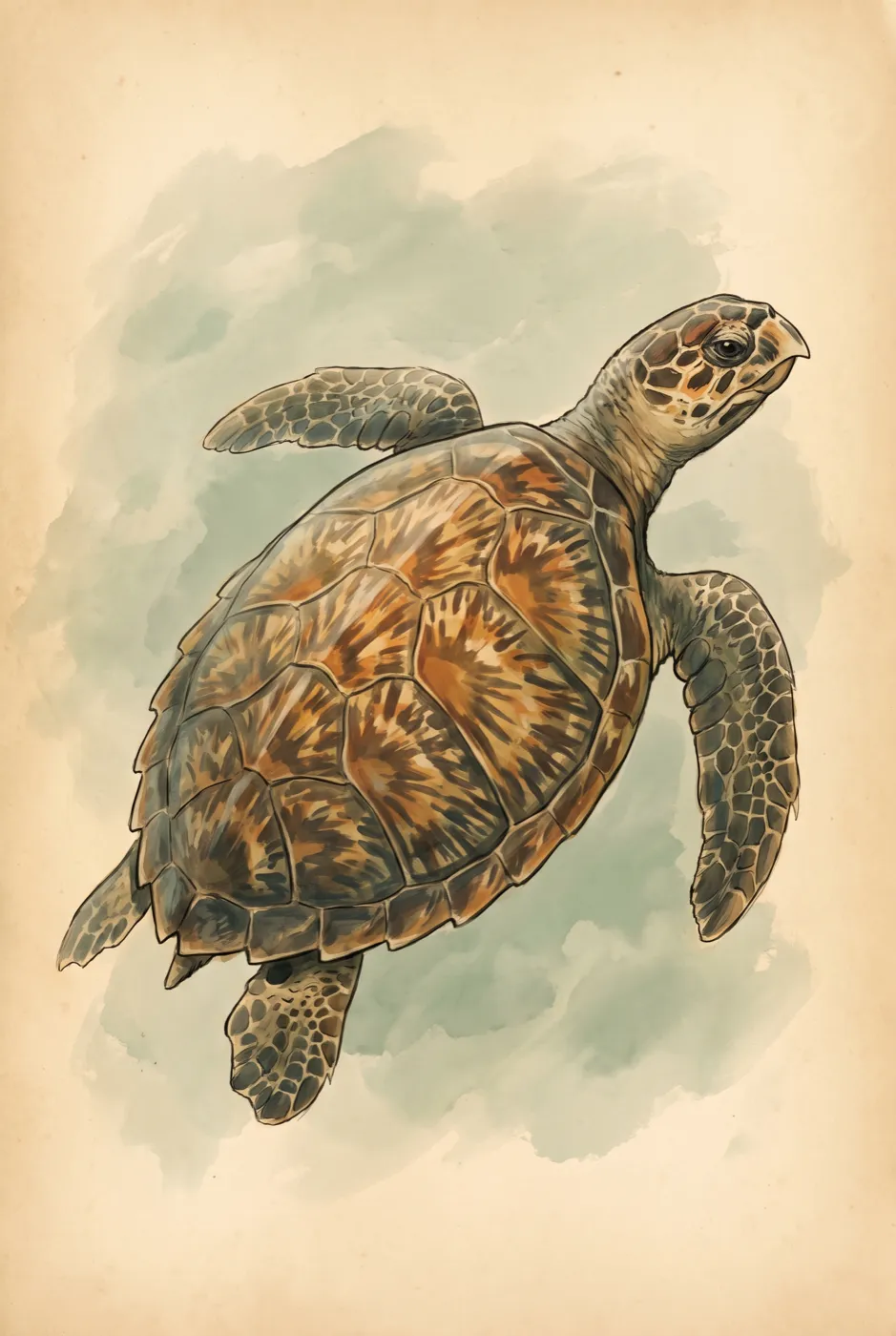
Original illustration of the Hawksbill Turtle

Card 13 of 30

Hawksbill Turtle

Eretmochelys imbricata

Endangered

The world's tortoiseshell came from this one turtle.

Size
2.5–3 ft shell · 100–150 lbs
Lifespan
50 years or more (estimated)
Diet
Mainly sea sponges — a reef specialist
Remaining↓
20,000–23,000 nesting females per Sea Turtle Conservancy
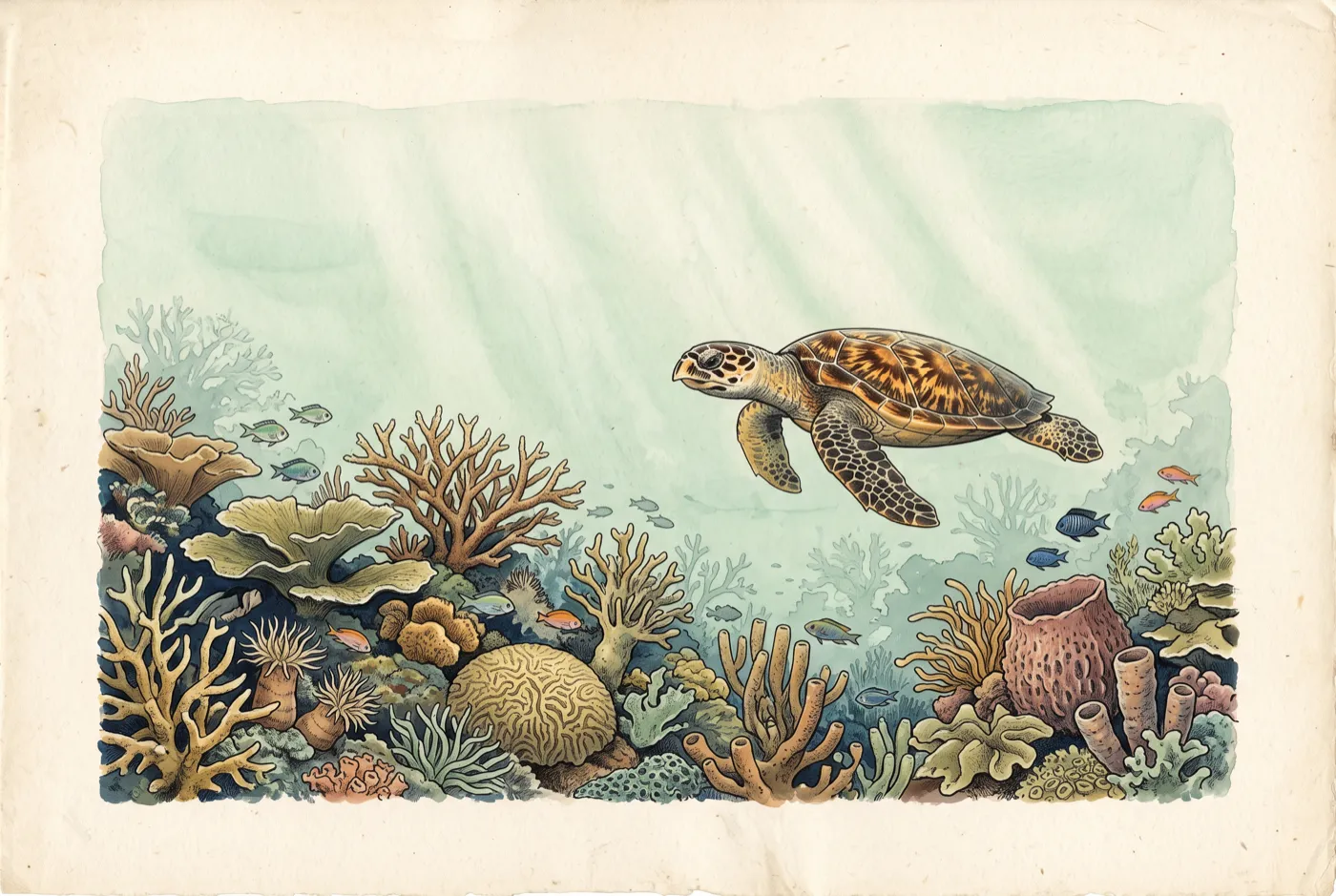
The Hawksbill Turtle in its habitat, an original illustration
Tropical reefs of the Atlantic, Pacific & Indian Oceans

Where it lives

Tropical reefs of the Atlantic, Pacific & Indian Oceans

Ranges stay general on purpose. Witness never publishes a location that could help someone find an animal already under pressure.

See it on the map

What threatens it

  • Tortoiseshell trade
  • Egg collection
  • Fishing bycatch
  • Reef loss & warming

Life cycle

Every one to five years a female returns to nest, laying three to five clutches of 130 to 160 eggs each. They incubate for about two months in sand whose temperature decides the hatchlings' sex.

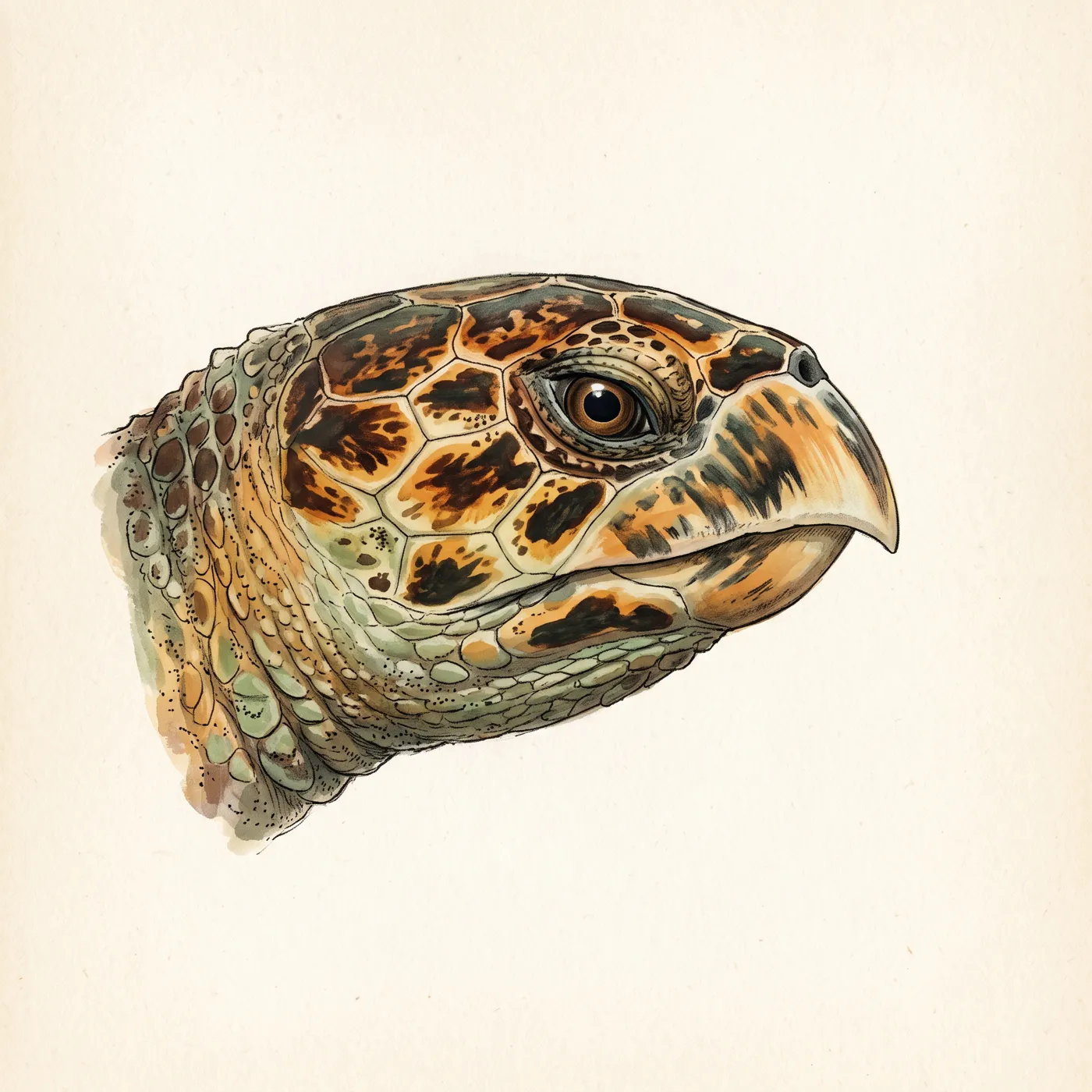
Field study of the Hawksbill Turtle, an original illustration
Field study · Hawksbill Turtle
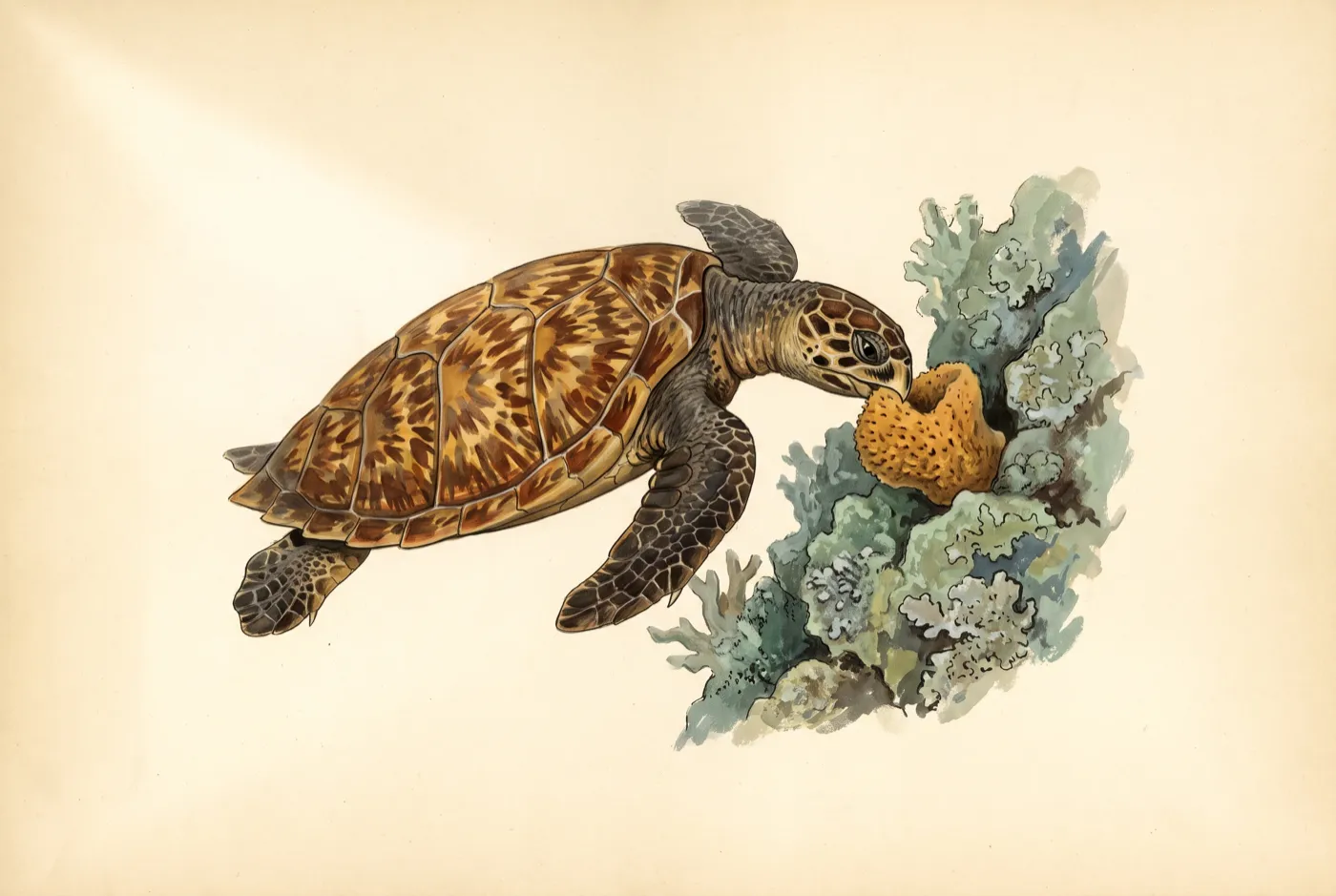
The Hawksbill Turtle observed in the field, an original illustration
Field observation

Field notes

Every passage carries the number of the source it came from. Nothing here is written from memory.

The hawksbill is named for its face: a narrow head ending in a beak like a raptor's, built to reach into reef crevices.Source 1

Its shell is the beautiful part — overlapping plates in amber, orange, red, and black, edges serrated like a saw.Source 1

That beauty nearly killed it. For centuries, the world's tortoiseshell combs, spectacles, and jewelry came chiefly from this one species.Source 1

International trade has been banned for decades, yet the shell still surfaces as hair ornaments and trinkets in some markets.Source 2Source 3

On the reef it does singular work: it is the only sea turtle that can live mainly on sponges, keeping space open for corals and fish.Source 1

Females cross oceans to nest at night on small hidden beaches, burying around 160 eggs high under the vegetation.Source 1Source 2

The warmth of the sand decides each hatchling's sex — and hotter beaches are skewing the balance.Source 1

A hatchling that survives will not breed until it is twenty to thirty-five years old.Source 1

Where protection is real, it works: in the Solomon Islands, two decades of monitoring show encouraging signs of recovery.Source 1

To witness the hawksbill is to want the reef whole — turtle, sponge, and coral together.Source 1
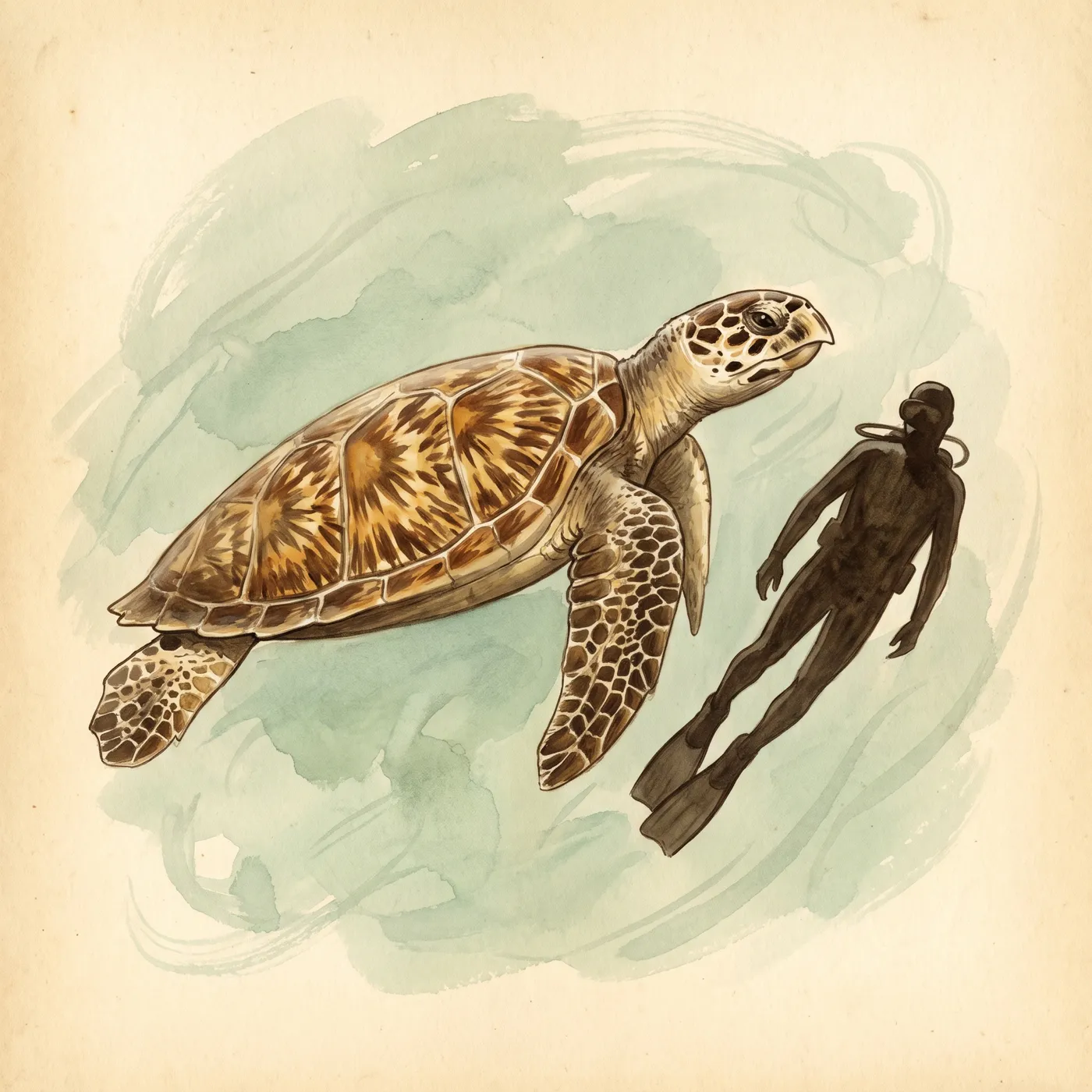
The Hawksbill Turtle drawn to scale beside a human figure
Scale study · beside a human figure

Did you know

The hawksbill is the only sea turtle that can survive mainly on sea sponges — its appetite keeps reef space open for corals and fish.

This week’s act · for the Hawksbill Turtle

Meet the hawksbill

Read NOAA Fisheries' species profile: the tortoiseshell history, the sponge diet, and the protections in force today.

with NOAA Fisheries

6 minutes · Worldwide · verified 24 August 2026

Witness records that this door was opened. It never claims the outcome.

Help & protection

  • Sea Turtle Conservancy

    Satellite tracking

    Tags hawksbills and other sea turtles across the Caribbean and beyond, publishing live migration maps anyone can follow.

    View initiative ↗Verified 24 August 2026
  • NOAA Fisheries

    Recovery & bycatch reduction

    Runs the US recovery plans, requires turtle excluder devices in trawls, and enforces the international trade ban on tortoiseshell.

    View initiative ↗Verified 24 August 2026

Sources & verification

Status
Endangered
Range (generalized)
Tropical reefs of the Atlantic, Pacific & Indian Oceans
Fact-checked
25 August 2026
Location review
generalized
Artwork
AI-assisted stylized illustration
  1. NOAA Fisheries

    Hawksbill Turtle

    Open source ↗Last accessed 24 August 2026
  2. Sea Turtle Conservancy

    Hawksbill

    Open source ↗Last accessed 24 August 2026
  3. NOAA Fisheries

    Hawksbill Turtle: Conservation & Management

    Open source ↗Last accessed 24 August 2026
  4. Sea Turtle Conservancy

    Sea Turtle Tracking

    Open source ↗Last accessed 24 August 2026
  5. WWF-UK

    Marine Turtles

    Open source ↗Last accessed 24 August 2026

Record last fact-checked 25 August 2026. The illustrations are original, drawn for Witness; they are not photographs.

In the app, this card arrives on a Monday.

Meet the species, bear witness once, take up its act. The weekly card is free and stays free.