Skip to content
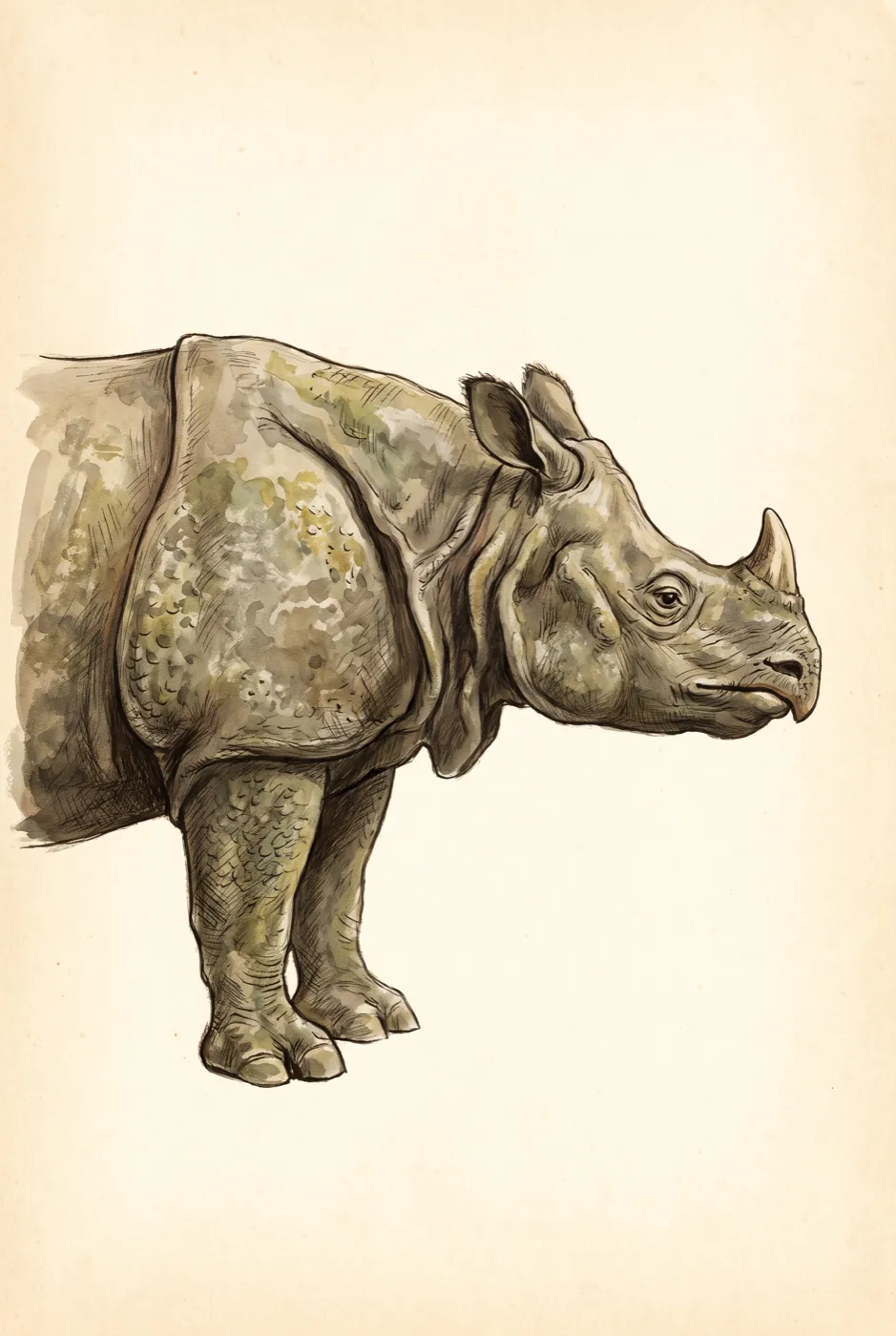
Original illustration of the Javan Rhino

Card 06 of 30

Javan Rhino

Rhinoceros sondaicus

Critically Endangered

Every Javan rhino on Earth lives in a single park.

Size
5–5.5 ft tall · 2,000–5,060 lbs
Lifespan
35–40 years (estimated)
Diet
Leaves, shoots & twigs — 300+ plant species
Remaining↓
About 50 per International Rhino Foundation
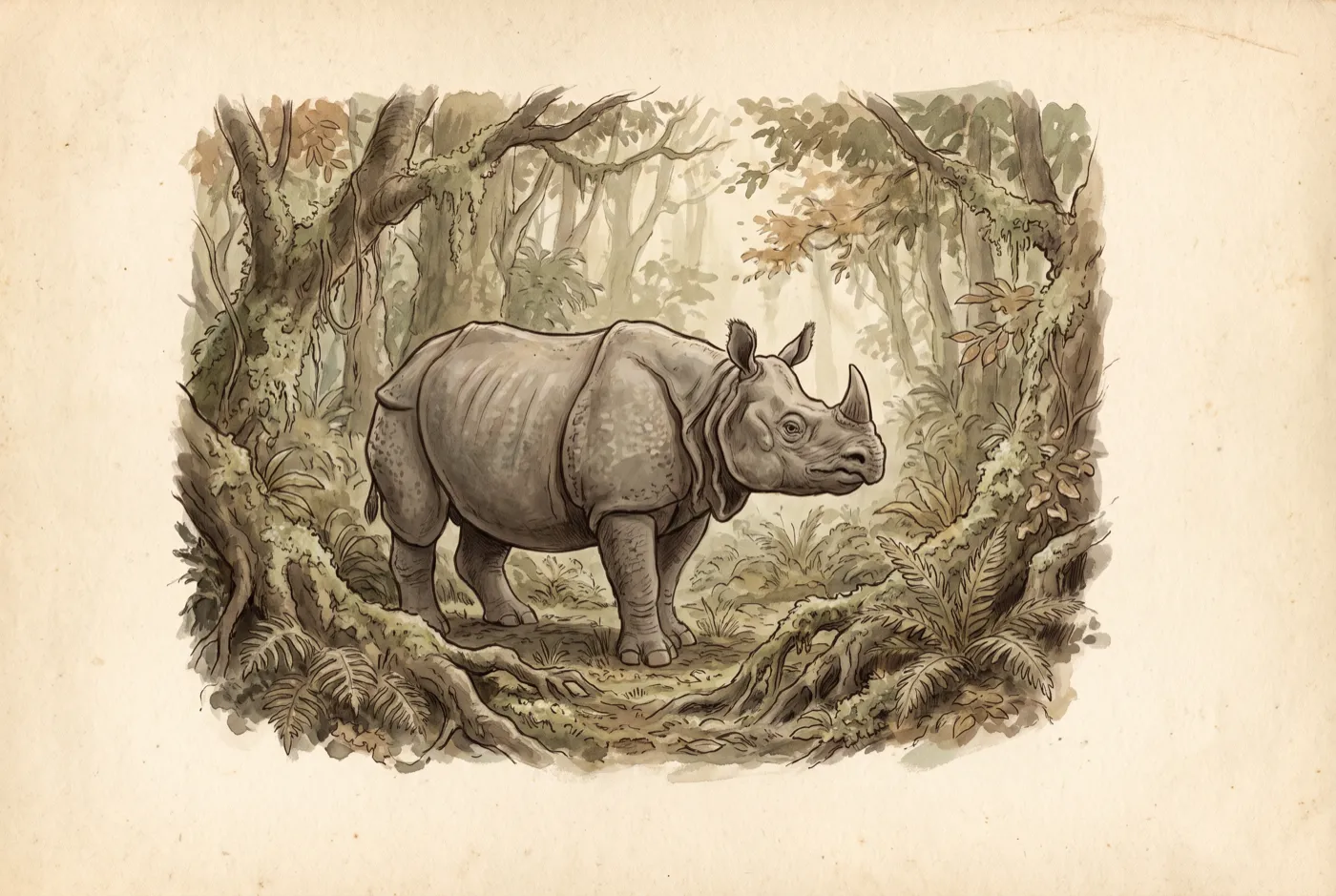
The Javan Rhino in its habitat, an original illustration
Ujung Kulon National Park, Java, Indonesia

Where it lives

Ujung Kulon National Park, Java, Indonesia

Ranges stay general on purpose. Witness never publishes a location that could help someone find an animal already under pressure.

See it on the map

What threatens it

  • Poaching for horn
  • One last population
  • Invasive palm spread
  • Natural disaster risk

Life cycle

A single calf is born after a gestation of about sixteen months, and a female calves only every two to three years. Javan rhinos live alone; a mother with her small calf is the only lasting company the species keeps.

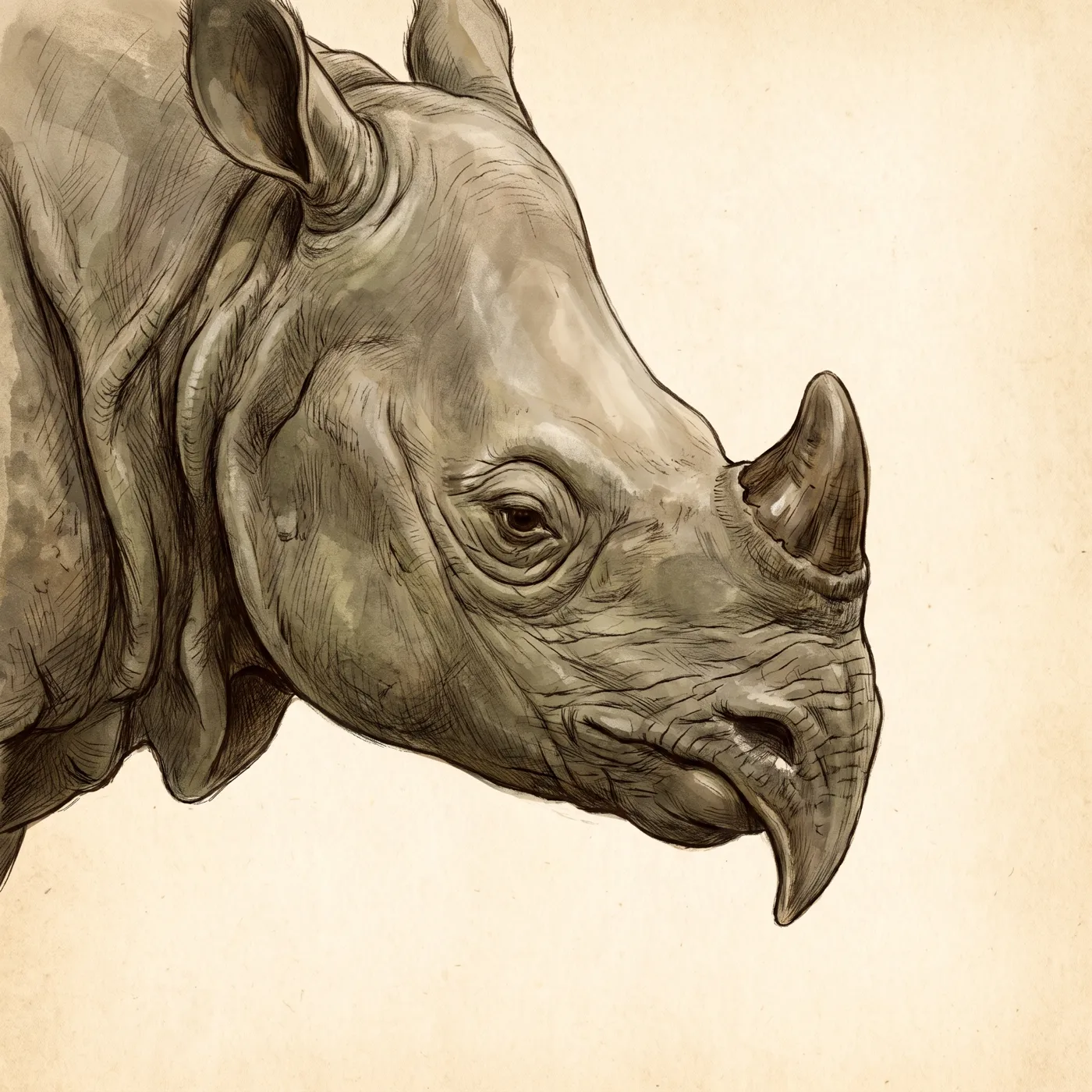
Field study of the Javan Rhino, an original illustration
Field study · Javan Rhino
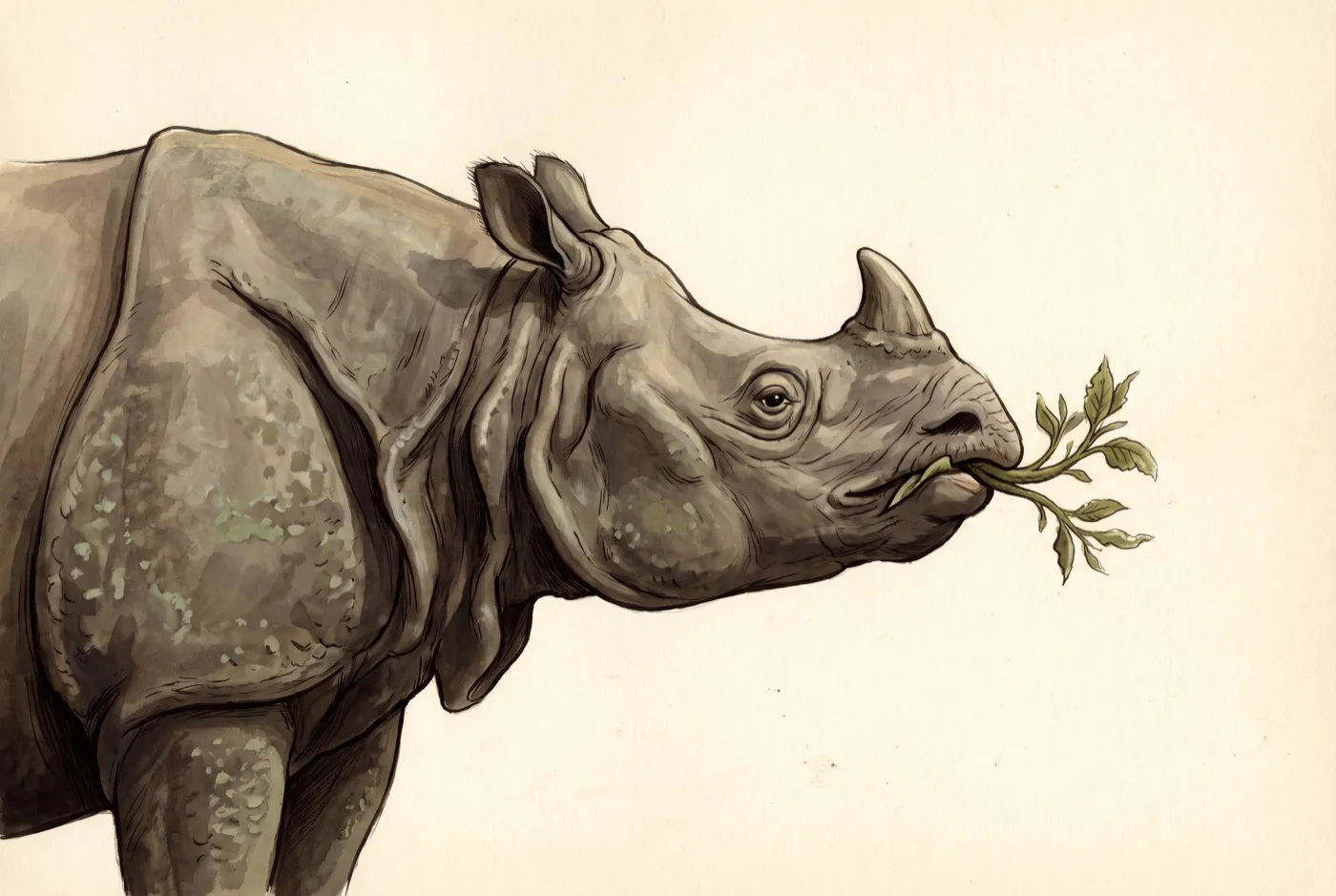
The Javan Rhino observed in the field, an original illustration
Field observation

Field notes

Every passage carries the number of the source it came from. Nothing here is written from memory.

The Javan rhino wears its skin like armor: deep folds across neck and shoulder, grey turning almost black in the rain.Source 1Source 2

It browses with a long, pointed upper lip that grasps like a finger, pulling down leaves, young shoots, and twigs.Source 2

The species once ranged from India across Southeast Asia. Today it survives nowhere but Ujung Kulon, a forest peninsula on the western tip of Java.Source 2Source 1

Javan rhinos are solitary and so rarely seen that even the rangers who guard them know them mostly through camera traps.Source 1Source 3

The danger returned brutally: between 2019 and 2023, poaching syndicates killed twenty-six rhinos — roughly a quarter of the species.Source 1

Inside the park, an invasive palm shades out the plants the rhinos prefer to eat, quietly shrinking their world further.Source 3

And yet they keep breeding. At least one new calf has been recorded every year since 2012.Source 3

Protection is real and human-shaped: trained Rhino Protection Units patrol the forest, and researchers are studying a possible second home for the species.Source 1Source 3

To witness the Javan rhino is to hold attention on an animal almost no one alive will ever see.Source 1

Its future is shaped by choices — whether patrols stay funded, whether horn keeps a market, and whether one park can be enough.Source 1Source 3
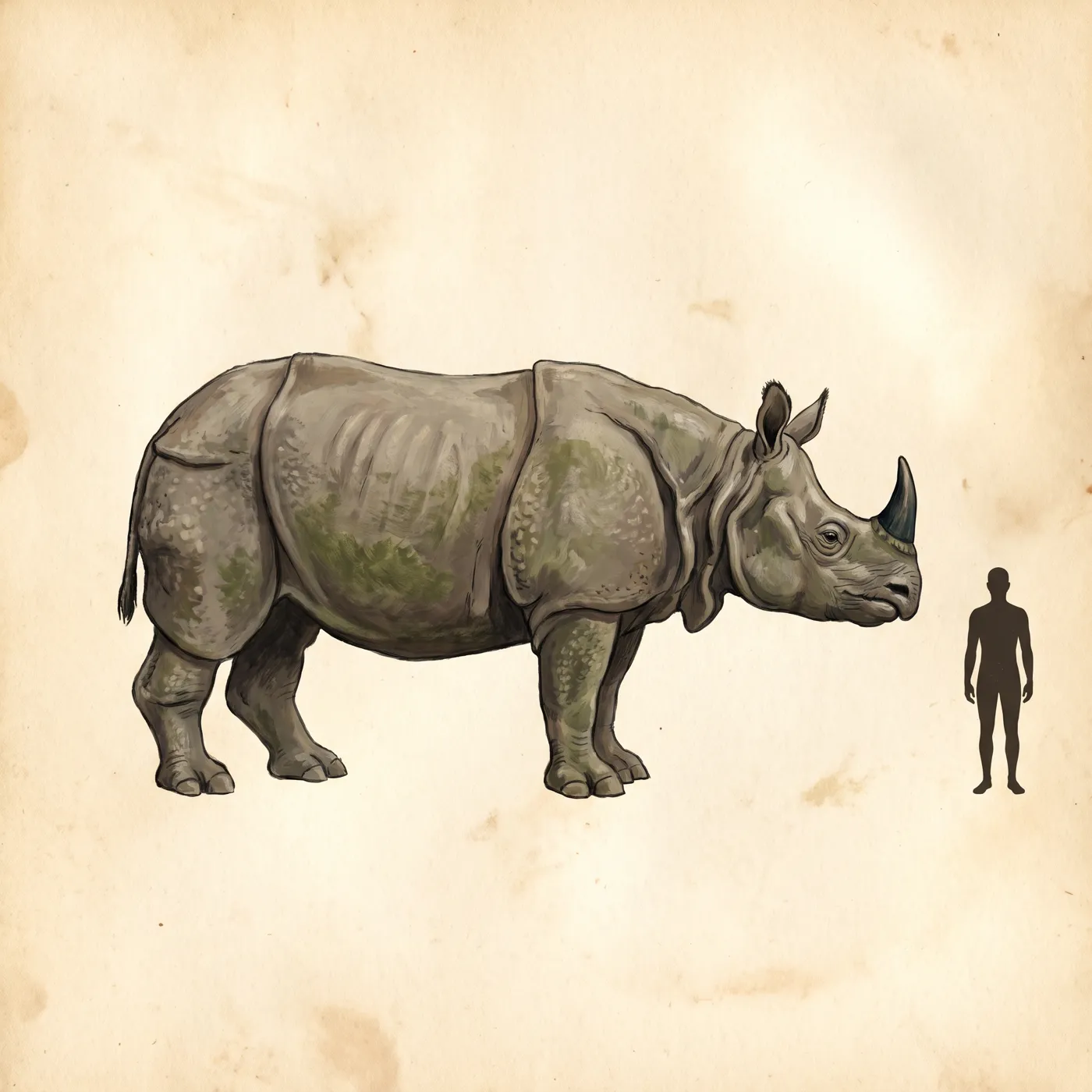

The Javan Rhino drawn to scale beside a human figure
Scale study · beside a human figure

Did you know

The last Javan rhino held in any zoo died in 1907. Every Javan rhino alive today is wild.

This week’s act · for the Javan Rhino

Meet the last Javan rhinos

Read the International Rhino Foundation's profile of the species: the population, the threats, and the protection work inside Ujung Kulon.

with International Rhino Foundation

5 minutes · Worldwide · verified 24 August 2026

Witness records that this door was opened. It never claims the outcome.

Help & protection

  • International Rhino Foundation

    Rhino Protection Units

    Funds trained anti-poaching units that intensively patrol Ujung Kulon National Park, the only place on Earth Javan rhinos survive.

    View initiative ↗Verified 24 August 2026
  • Save the Rhino International

    Ujung Kulon programme

    Supports anti-poaching patrols, camera-trap monitoring of the whole population, and research toward a possible second site for the species.

    View initiative ↗Verified 24 August 2026

Sources & verification

Status
Critically Endangered
Range (generalized)
Ujung Kulon National Park, Java, Indonesia
Fact-checked
25 August 2026
Location review
generalized
Artwork
AI-assisted stylized illustration
  1. International Rhino Foundation

    Javan Rhino

    Open source ↗Last accessed 24 August 2026
  2. Save the Rhino International

    Javan Rhinos

    Open source ↗Last accessed 24 August 2026
  3. Save the Rhino International

    Indonesia: Ujung Kulon National Park

    Open source ↗Last accessed 24 August 2026

Record last fact-checked 25 August 2026. The illustrations are original, drawn for Witness; they are not photographs.

In the app, this card arrives on a Monday.

Meet the species, bear witness once, take up its act. The weekly card is free and stays free.