Skip to content
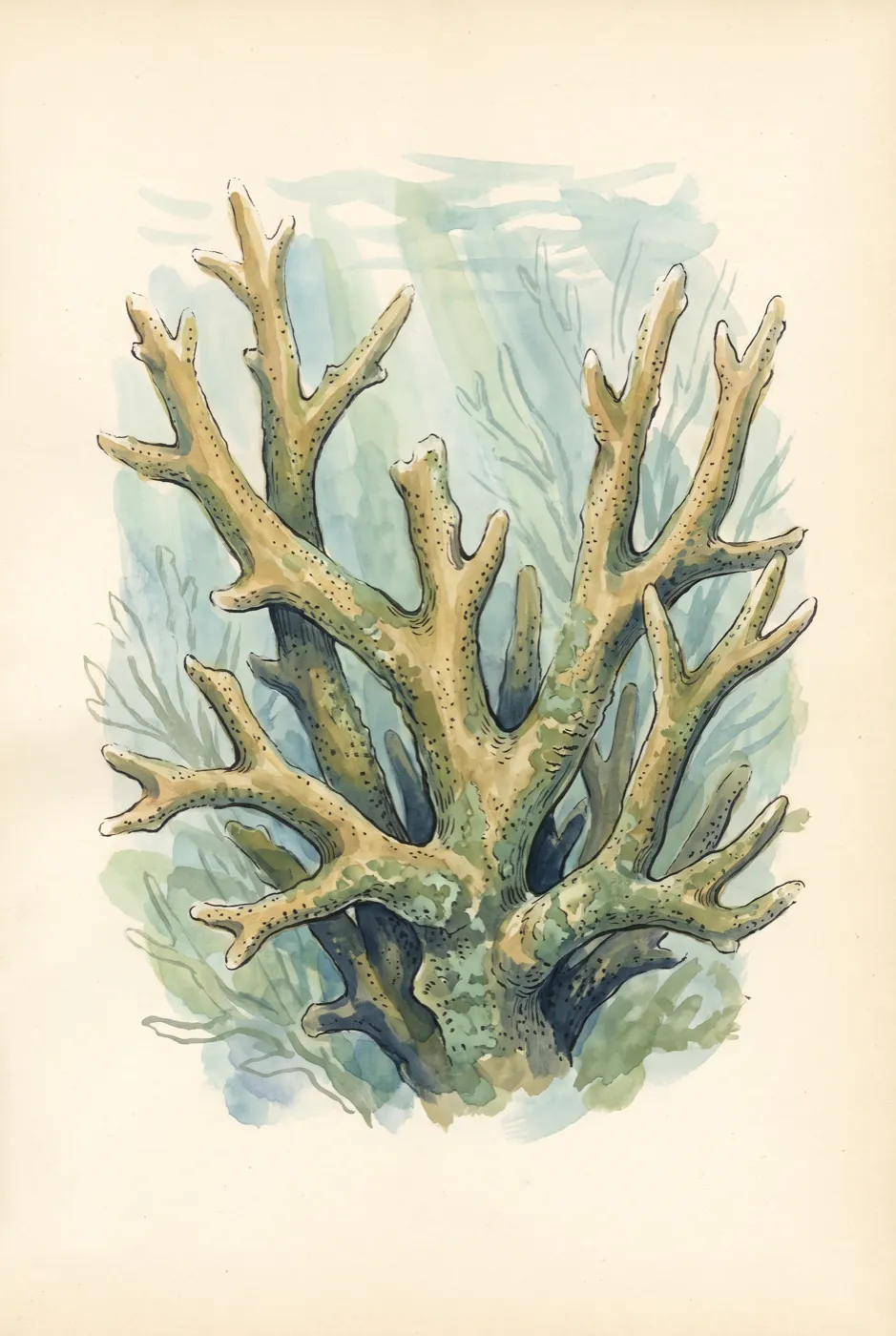
Original illustration of the Staghorn Coral

Card 25 of 30

Staghorn Coral

Acropora cervicornis

Threatened

The reef is an animal. And it can be replanted.

Size
Colonies to 4 ft tall · 6 ft wide
Lifespan
Indefinite — colonies regrow from fragments
Diet
Algae partners by day, plankton by night
Remaining↓
Down 97% since the 1980s per NOAA Fisheries
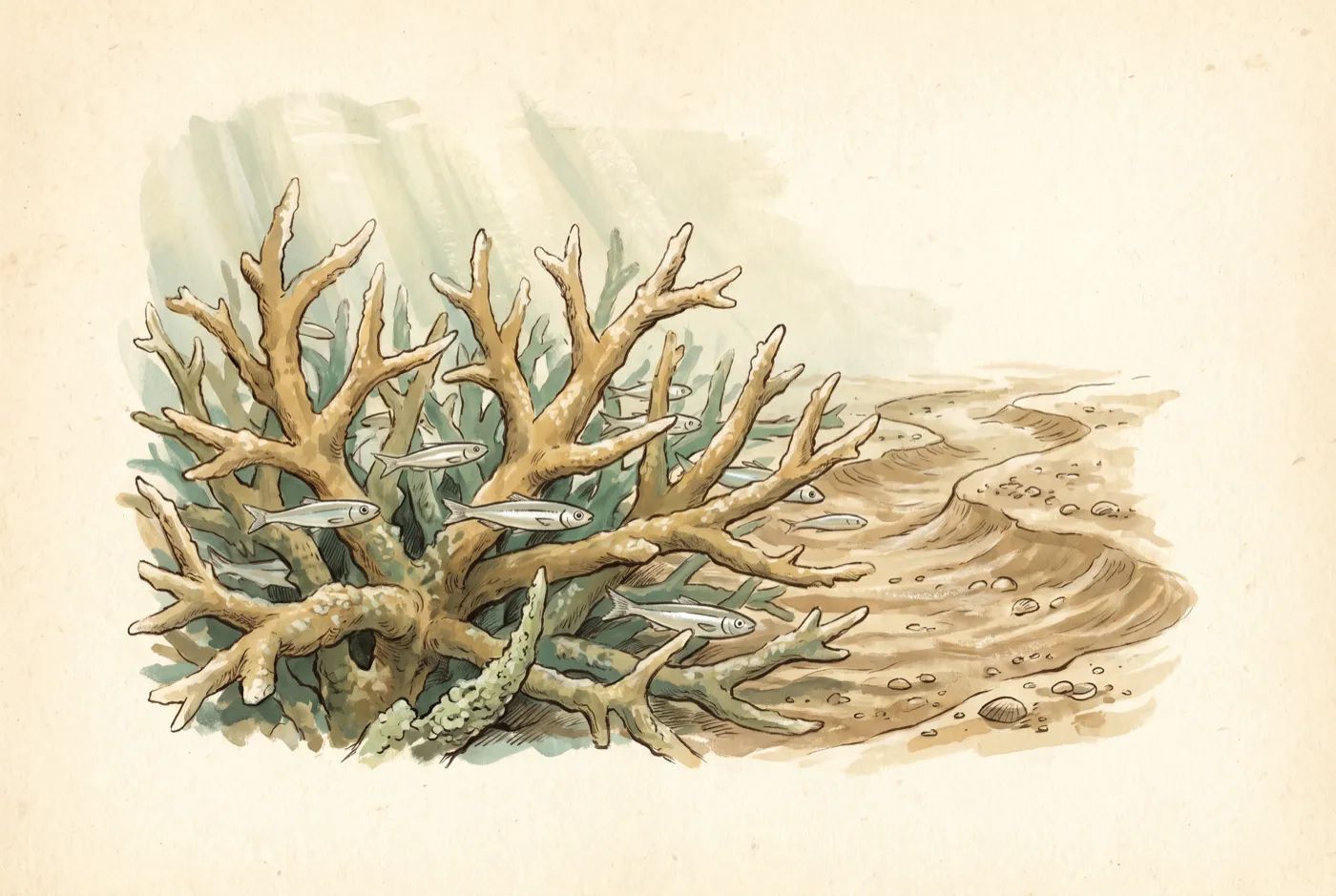
The Staghorn Coral in its habitat, an original illustration
Florida, the Bahamas, and the Caribbean

Where it lives

Florida, the Bahamas, and the Caribbean

Ranges stay general on purpose. Witness never publishes a location that could help someone find an animal already under pressure.

See it on the map

What threatens it

  • Warming & bleaching
  • White band disease
  • Ocean acidification
  • Land-based pollution

Life cycle

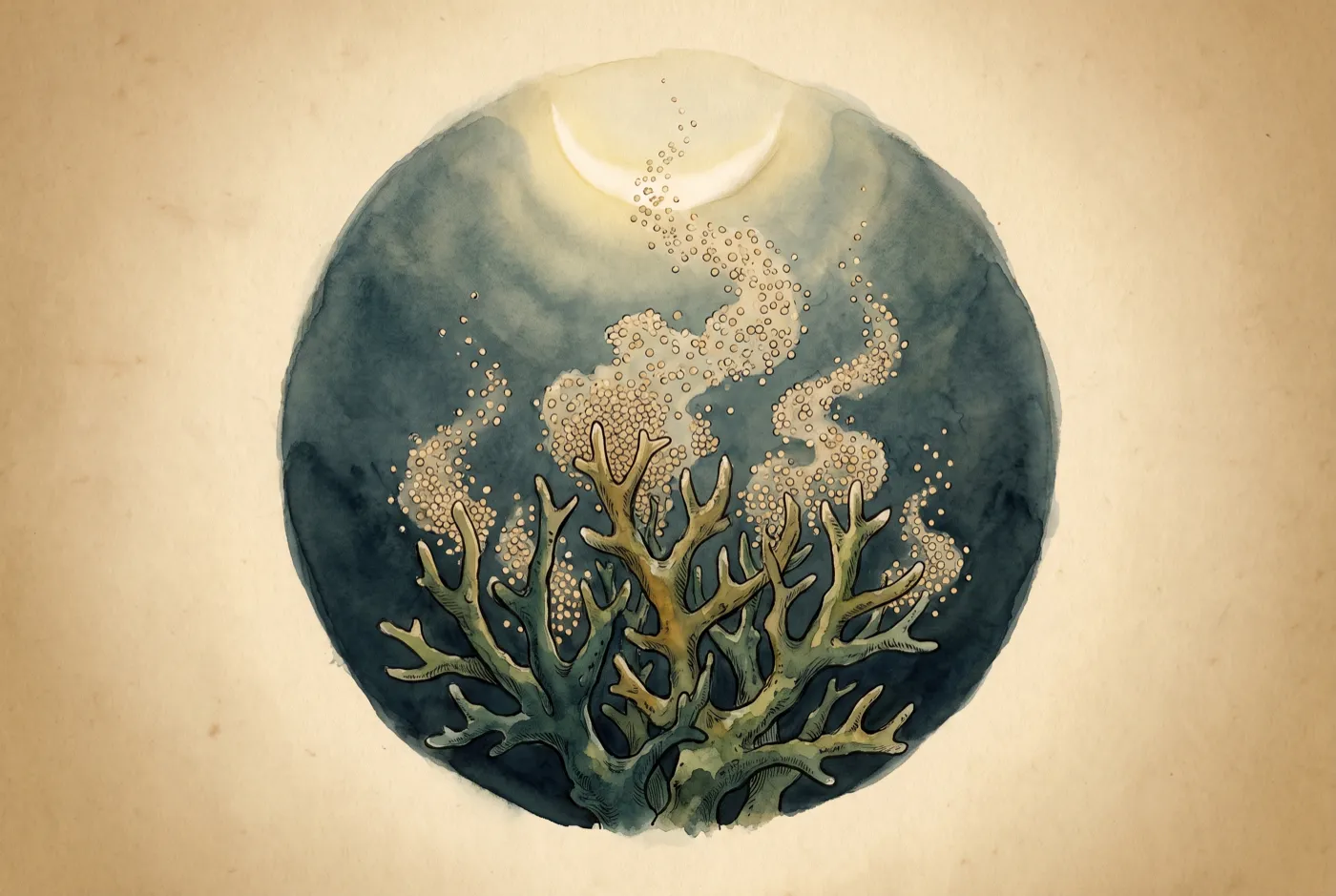
Once a year, after the late-summer full moon, colonies broadcast eggs and sperm into the water in synchrony. The rest of the year, reproduction is a matter of breakage — fragments that land well become new colonies.

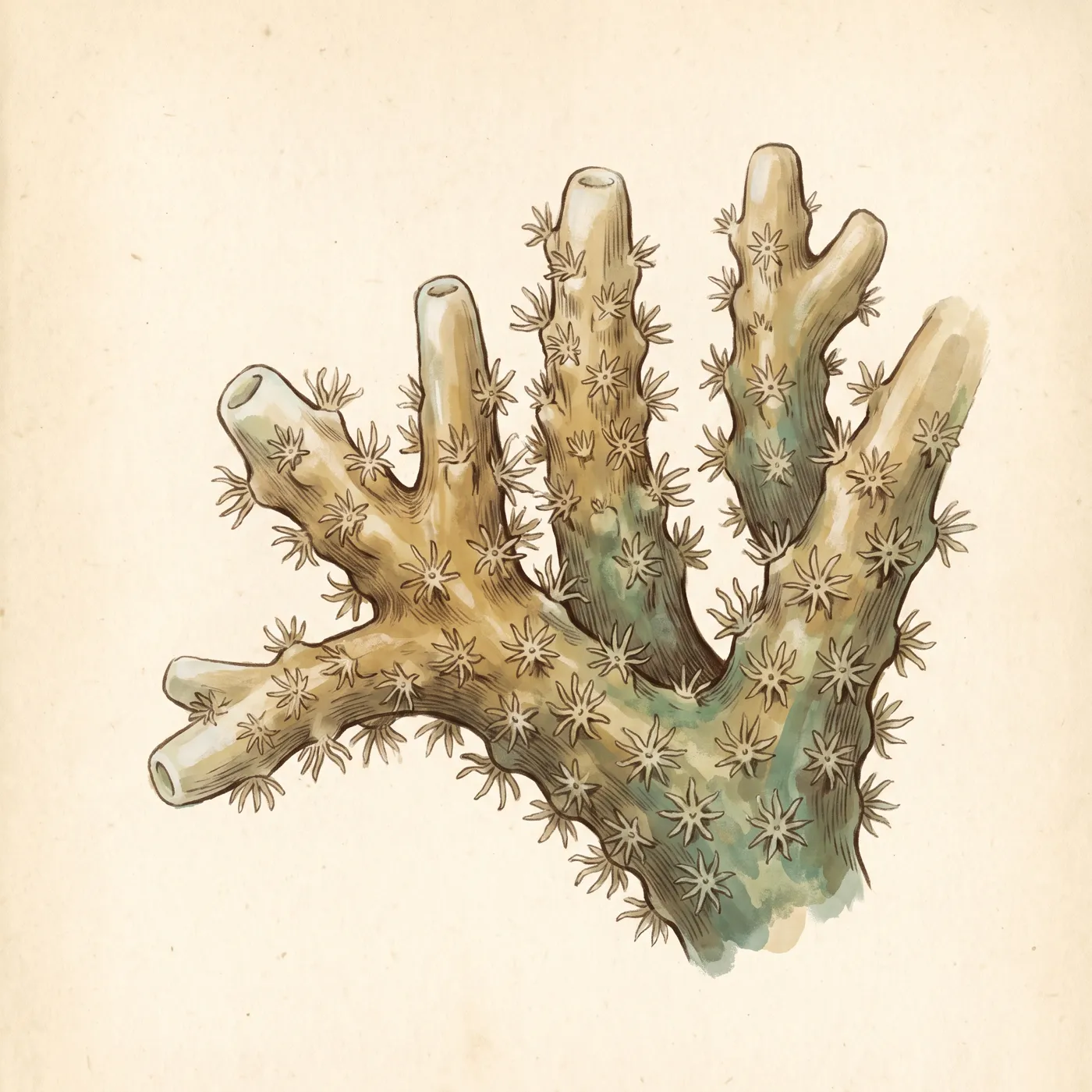
Field study of the Staghorn Coral, an original illustration
Field study · Staghorn Coral
The Staghorn Coral observed in the field, an original illustration
Field observation

Field notes

Every passage carries the number of the source it came from. Nothing here is written from memory.

Staghorn coral is an animal — one animal made of thousands: identical polyps growing together into antlered branches.Source 1

It runs on a partnership: photosynthetic algae live inside its cells and feed it by day, while tentacled polyps snatch plankton.Source 1

Healthy, it grows up to eight inches of new branch a year, and its thickets are habitat for reef fish.Source 1

These corals built the Caribbean's reefs over the past five thousand years, and their thickets blunt storm waves before shorelines.Source 1

Then, beginning in the 1980s, white band disease erased 97 percent of it.Source 1

The remaining danger is heat: too-warm water makes coral expel its algae, bleaching white and starving.Source 2

But a broken branch is not an ending — fragments that reattach grow into whole new colonies.Source 1

Restoration runs on that fact: divers hang finger-sized fragments from underwater coral trees, and in six to nine months each is reef-ready.Source 3

Once a year, after the late-summer full moon, whole reefs spawn in synchrony — and outplanted staghorn at Molasses Reef became the first restored corals documented joining in.Source 1Source 4

To witness the staghorn is to count the reef itself as a creature that can be replanted.Source 5
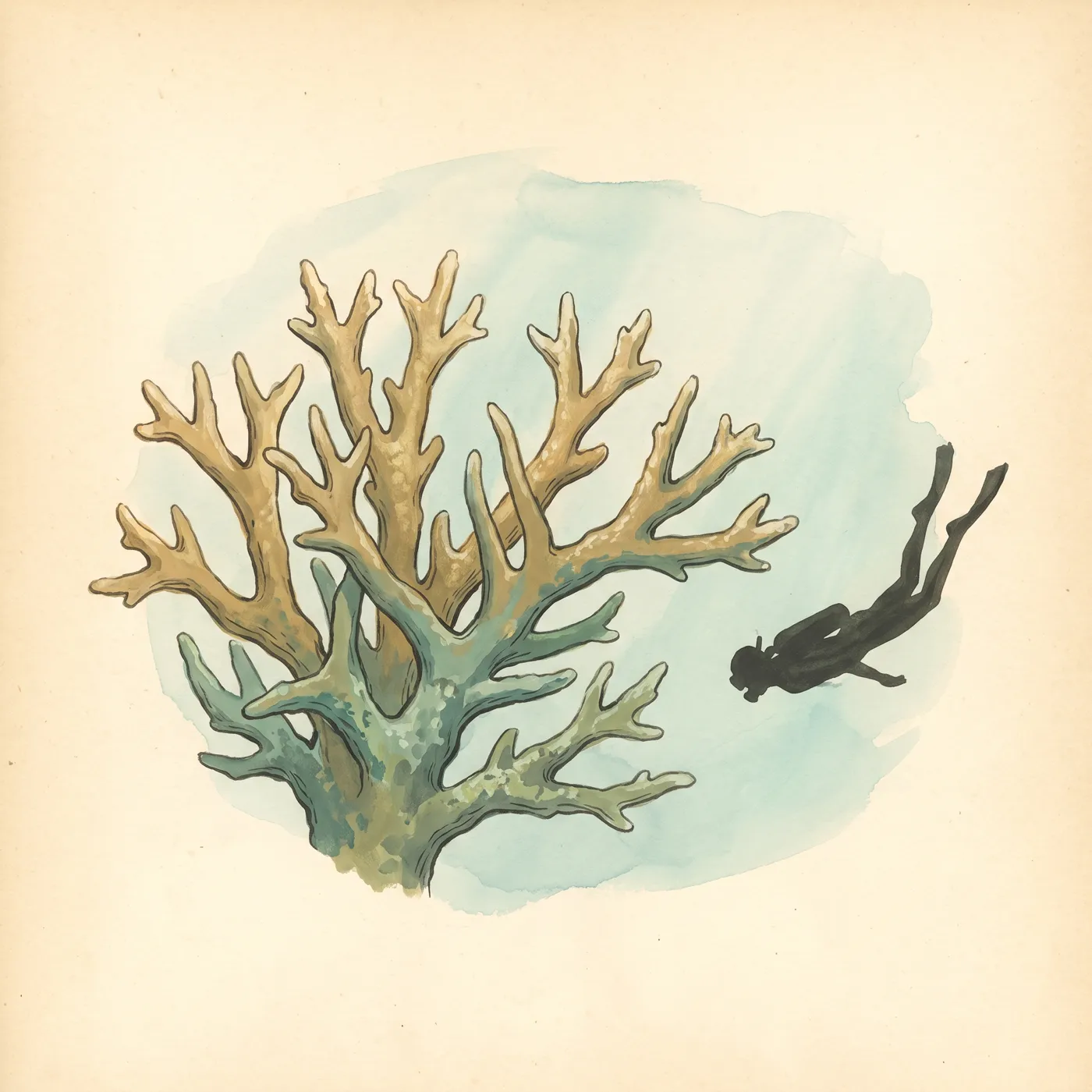
The Staghorn Coral drawn to scale beside a human figure
Scale study · beside a human figure

Did you know

The world's largest in-ocean coral nursery — 1.5 acres off Tavernier, Florida — can grow more than 50,000 reef-ready corals a year on underwater trees.

This week’s act · for the Staghorn Coral

Meet the reef-builder

Read NOAA Fisheries' staghorn profile: the polyp-and-algae partnership, the white band collapse, and how fragmentation makes restoration possible.

with NOAA Fisheries

6 minutes · Worldwide · verified 25 August 2026

Witness records that this door was opened. It never claims the outcome.

Help & protection

  • Coral Restoration Foundation

    Coral Tree nurseries

    Grows staghorn fragments on underwater trees and outplants them to the reef in same-genotype cohorts that fuse into thickets.

    View initiative ↗Verified 25 August 2026
  • NOAA Fisheries

    Mission: Iconic Reefs

    Restoring seven Florida Keys reef sites toward 25% coral cover, with staghorn planted across the mission's phases.

    View initiative ↗Verified 25 August 2026

Sources & verification

Status
Threatened
Range (generalized)
Florida, the Bahamas, and the Caribbean
Fact-checked
25 August 2026
Location review
generalized
Artwork
AI-assisted stylized illustration
  1. NOAA Fisheries

    Staghorn Coral

    Open source ↗Last accessed 25 August 2026
  2. NOAA Coral Reef Conservation Program

    Water Temperature, Zooxanthellae and Coral Bleaching

    Open source ↗Last accessed 25 August 2026
  3. Coral Restoration Foundation

    CRF Coral Tree Nurseries

    Open source ↗Last accessed 25 August 2026
  4. Coral Restoration Foundation

    Coral Spawning

    Open source ↗Last accessed 25 August 2026
  5. Coral Restoration Foundation

    Restoration

    Open source ↗Last accessed 25 August 2026
  6. Coral Restoration Foundation

    CRF Florida

    Open source ↗Last accessed 25 August 2026
  7. NOAA Fisheries

    Restoring Seven Iconic Reefs

    Open source ↗Last accessed 25 August 2026

Record last fact-checked 25 August 2026. The illustrations are original, drawn for Witness; they are not photographs.

In the app, this card arrives on a Monday.

Meet the species, bear witness once, take up its act. The weekly card is free and stays free.