Skip to content
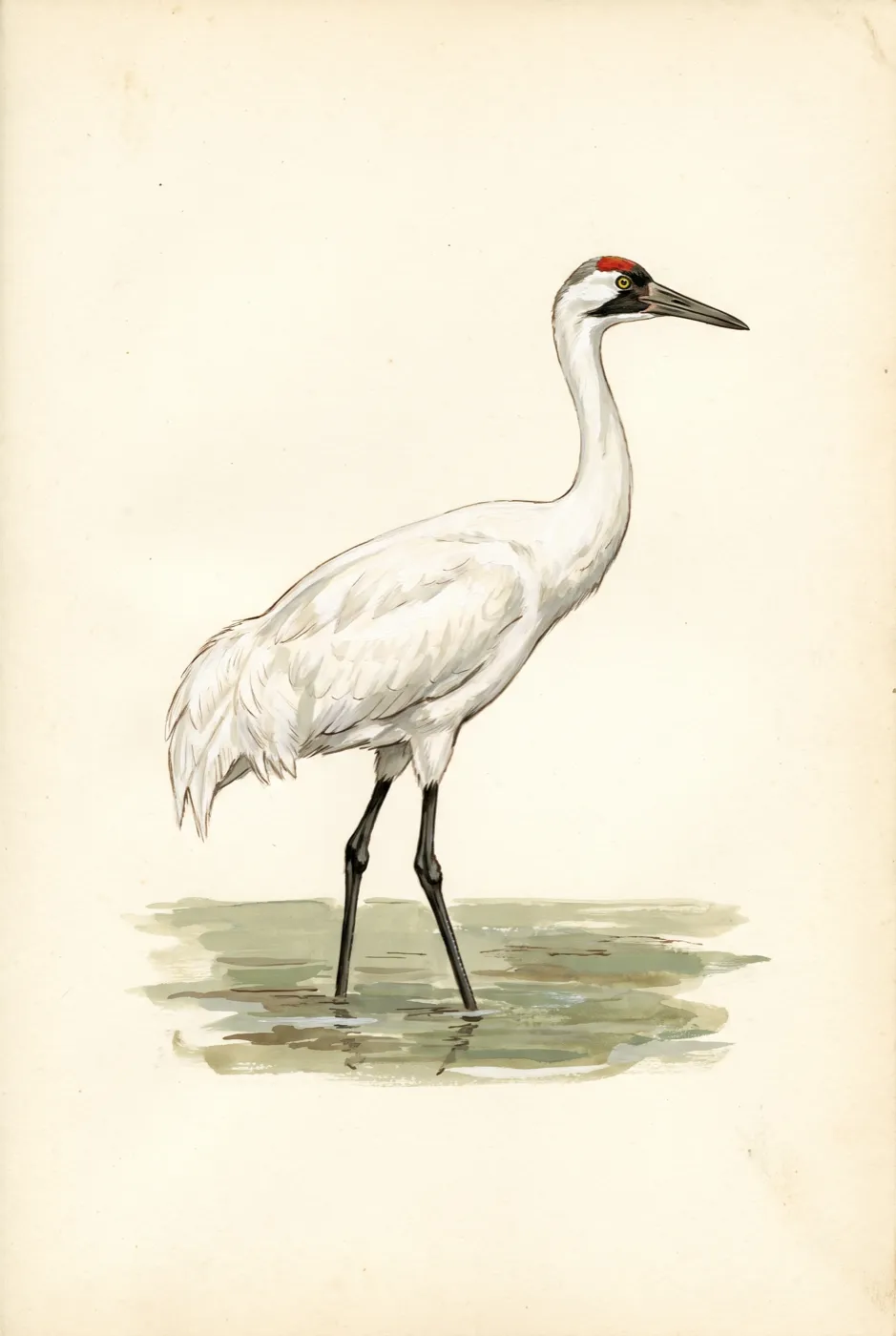
Original illustration of the Whooping Crane

Card 14 of 30

Whooping Crane

Grus americana

Endangered

By 1941, fifteen were left. They danced their way back.

Size
5 ft tall · 7½-ft wingspan
Lifespan
22–30 years in the wild
Diet
Blue crabs, clams, tubers & insects
Remaining↑
About 834 per International Crane Foundation
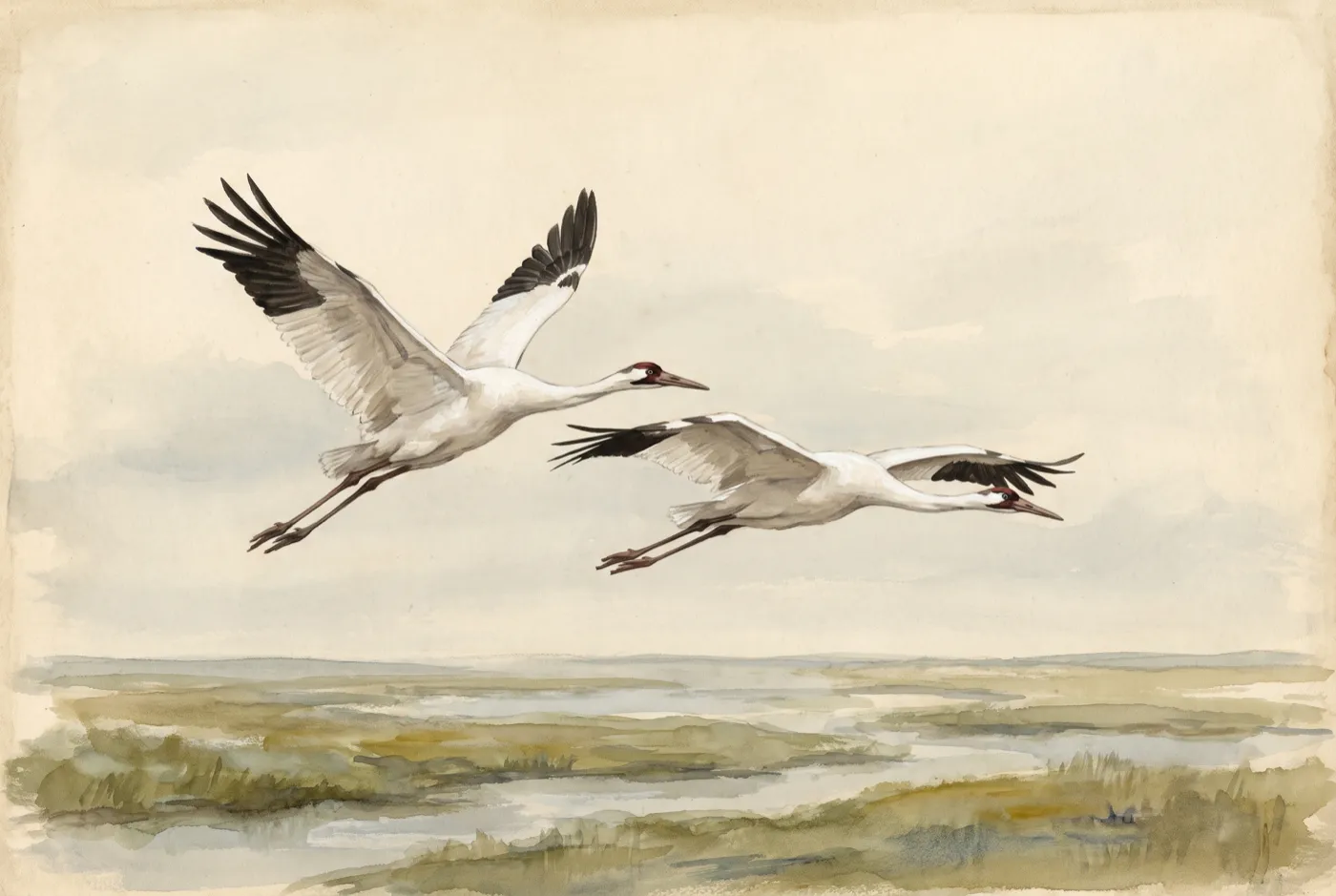
The Whooping Crane in its habitat, an original illustration
Canada's boreal wetlands to the Texas Gulf coast

Where it lives

Canada's boreal wetlands to the Texas Gulf coast

Ranges stay general on purpose. Witness never publishes a location that could help someone find an animal already under pressure.

See it on the map

What threatens it

  • Power-line collisions
  • Illegal shooting
  • Wetland loss
  • Coastal water diversion

Life cycle

The female lays two eggs, but usually one chick survives, fed by both parents and flying at three months. Pairs form at two or three, first nest around four, and stay together for life.

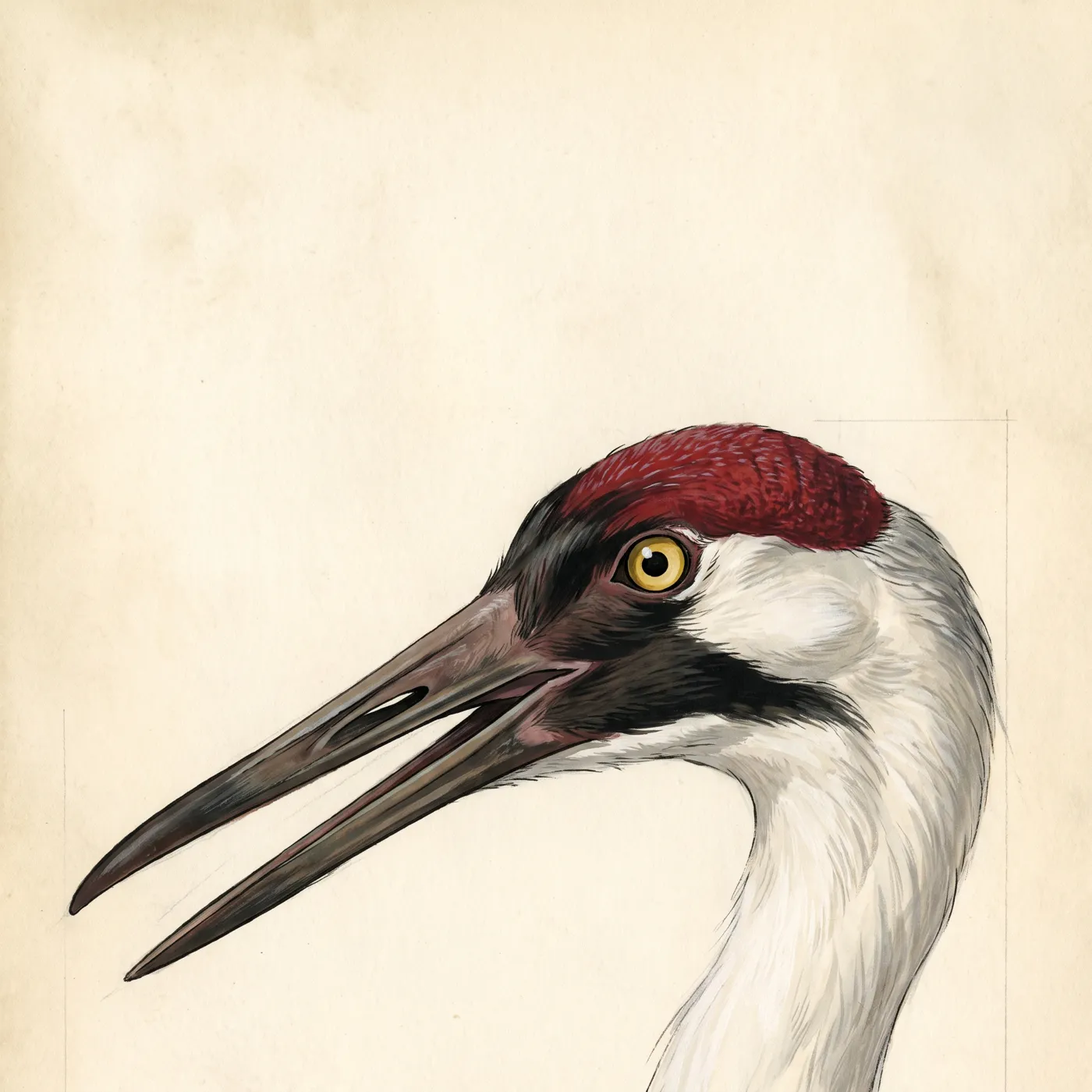
Field study of the Whooping Crane, an original illustration
Field study · Whooping Crane
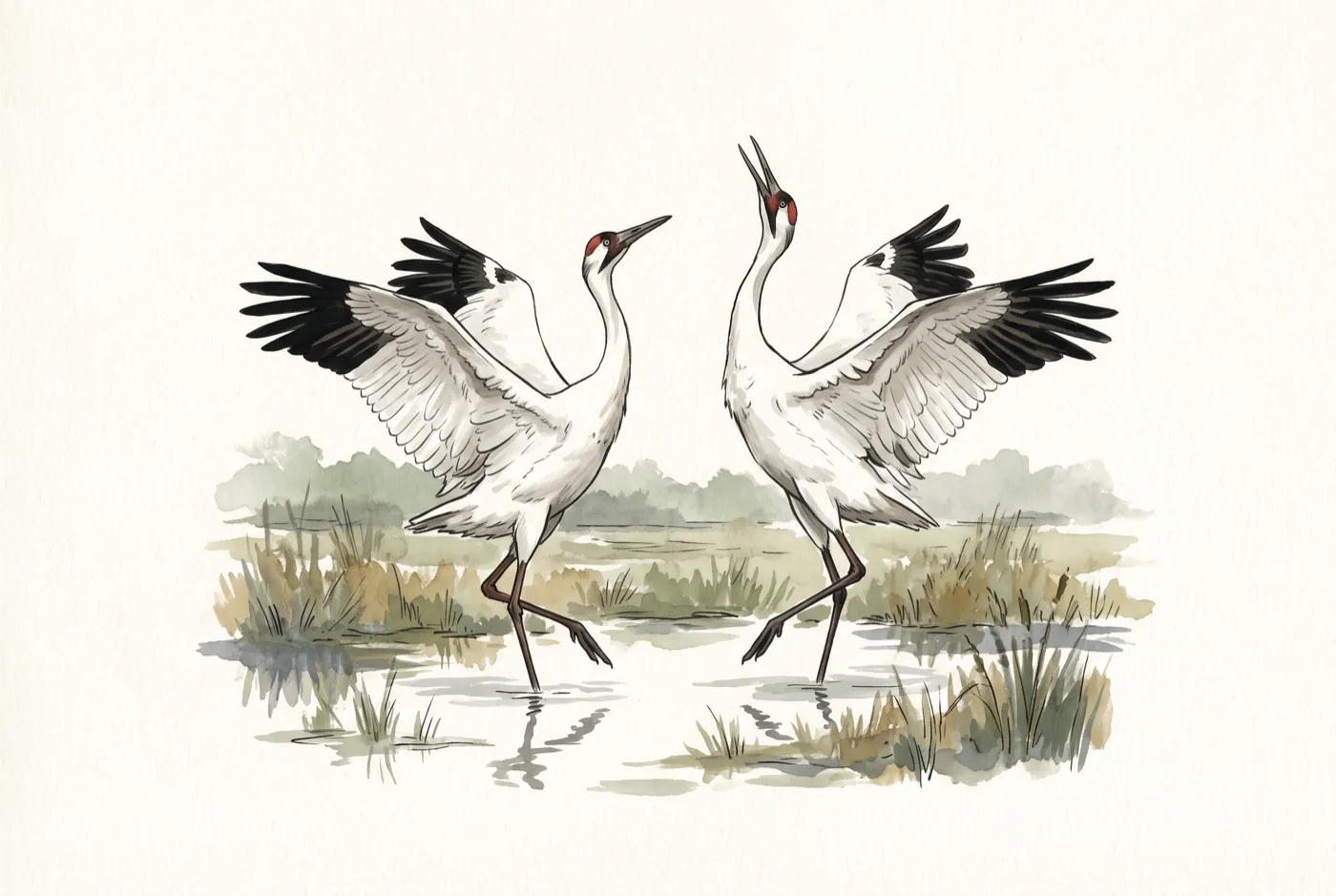
The Whooping Crane observed in the field, an original illustration
Field observation

Field notes

Every passage carries the number of the source it came from. Nothing here is written from memory.

The whooping crane stands five feet tall — the tallest bird in North America — white as paper, with a red crown and black wingtips that show only in flight.Source 1Source 2

Courting pairs dance: leaping again and again, wings flapping, bills pointed at the sky, bugling.Source 3

Pairs mate for life and sing a unison call together, holding their bond and their territory in one voice.Source 4Source 5

In the mid-1800s perhaps 1,500 lived in North America. By 1941, fifteen wintered in Texas.Source 4Source 3

The species survived on one long thread: a 2,500-mile migration between wetlands in northern Canada and the Texas coast.Source 6Source 7

Its nesting grounds were so remote they were not even discovered until 1954.Source 7Source 3

Recovery was slow, strange, and human: captive breeding, and a Wisconsin flock that learned to migrate by following an ultralight aircraft.Source 8

The wild flock has climbed past five hundred, its highest count since near-extinction.Source 7

The dangers now are power lines, illegal shooting, and upstream water use that starves the coast of the blue crabs the cranes winter on.Source 9Source 6

To witness the whooping crane is to hear a bugle that nearly went silent — and keeps getting louder.Source 2Source 7
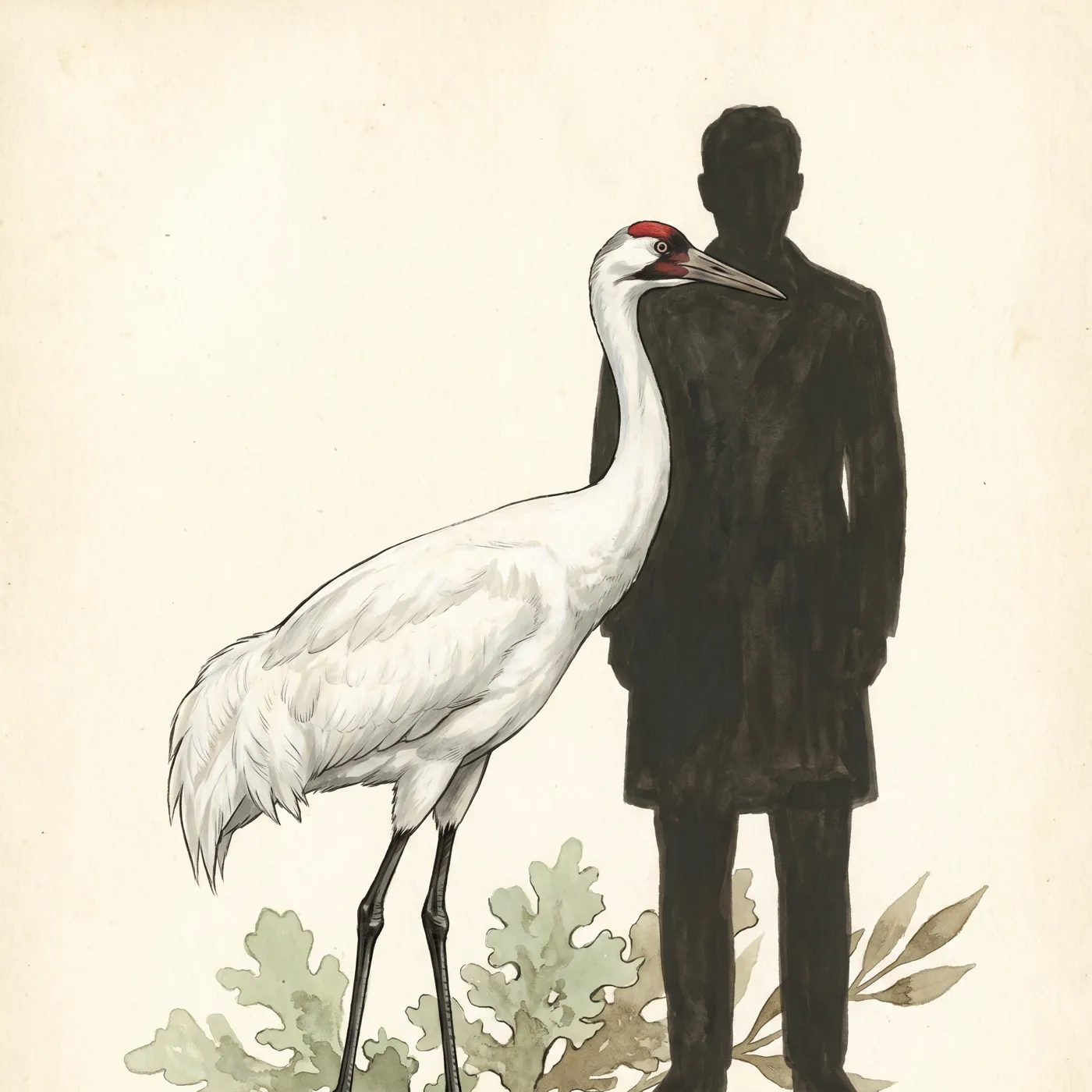

The Whooping Crane drawn to scale beside a human figure
Scale study · beside a human figure

Did you know

A reintroduced Wisconsin flock learned its migration by following an ultralight aircraft south — today's chicks learn the route from older cranes.

This week’s act · for the Whooping Crane

Read the crane's comeback

Read the International Crane Foundation's species profile: the 1941 bottleneck, the migration, and the work still holding the flock together.

with International Crane Foundation

5 minutes · Worldwide · verified 24 August 2026

Witness records that this door was opened. It never claims the outcome.

Help & protection

  • International Crane Foundation

    Texas Program

    Protects the wintering grounds of the last natural flock, including the river flows that keep Aransas rich in blue crabs.

    View initiative ↗Verified 24 August 2026
  • Texas Parks & Wildlife

    Texas Whooper Watch

    Community scientists log crane sightings to map stopover sites and hazards along the migration.

    View initiative ↗Verified 24 August 2026

Sources & verification

Status
Endangered
Range (generalized)
Canada's boreal wetlands to the Texas Gulf coast
Fact-checked
25 August 2026
Location review
generalized
Artwork
AI-assisted stylized illustration
  1. Smithsonian's National Zoo & Conservation Biology Institute

    Whooping Crane

    Open source ↗Last accessed 24 August 2026
  2. Texas Parks & Wildlife Department

    Whooper Watch: Identification

    Open source ↗Last accessed 24 August 2026
  3. National Audubon Society

    Whooping Crane Field Guide

    Open source ↗Last accessed 24 August 2026
  4. International Crane Foundation

    Whooping Crane

    Open source ↗Last accessed 24 August 2026
  5. Texas Parks & Wildlife Department

    Whooping Crane

    Open source ↗Last accessed 24 August 2026
  6. International Crane Foundation

    Texas Program

    Open source ↗Last accessed 24 August 2026
  7. Parks Canada

    Whooping Cranes — Wood Buffalo National Park

    Open source ↗Last accessed 24 August 2026
  8. International Crane Foundation

    Through the Decades: 20 Years of Whooping Crane Reintroduction in Wisconsin

    Open source ↗Last accessed 24 August 2026
  9. International Crane Foundation

    North America Program

    Open source ↗Last accessed 24 August 2026
  10. Texas Parks & Wildlife Department

    Texas Whooper Watch

    Open source ↗Last accessed 24 August 2026

Record last fact-checked 25 August 2026. The illustrations are original, drawn for Witness; they are not photographs.

In the app, this card arrives on a Monday.

Meet the species, bear witness once, take up its act. The weekly card is free and stays free.